The HDB Home Office Guide: How to Create a Work-From-Home Setup That Works
Hybrid work has quietly become the norm for many Singaporeans, but most HDB flats were designed around a very different lifestyle. The study room was optional, the dining table was just for meals, and the idea of taking a Zoom call from your bedroom was unthinkable.
Fast forward to today, and plenty of homeowners are still making do with a laptop propped up on the kitchen counter or a chair that was never meant to be sat in for eight hours straight. If that sounds familiar, this guide is for you.
Why Your Current Setup Probably Isn’t Working
Most people piece together a WFH arrangement out of whatever space and furniture they already have, and it works just well enough to get by. The problem is that “getting by” takes a toll over time, and not always in ways that are obvious at first.
The Blurred Line Between Work and Rest
When your workspace is also your dining table, your living room, or your bed, your brain never fully switches off. You sit down for dinner and your laptop is right there. You wake up and your work bag is the first thing you see.
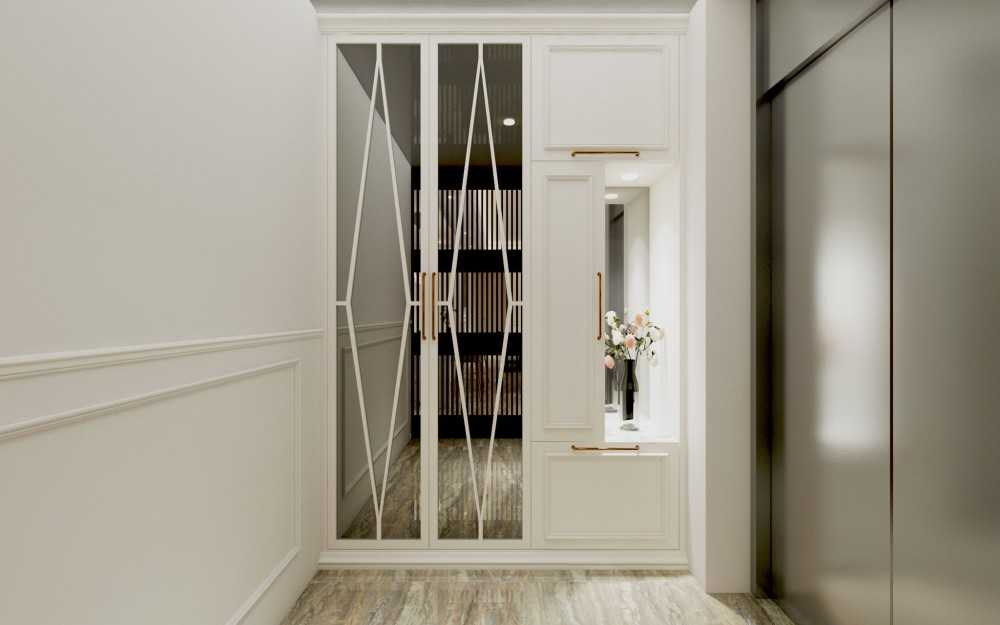
Woodleigh Hillside ($60,000) by Noble Interior Design
Over time, this makes it harder to rest properly at home, which affects both your sleep and your focus during work hours. Having even a loosely defined work zone — somewhere that is just for work — makes a real difference to how you feel at the end of the day.
It is also worth thinking about the people you live with. If you share your flat with a partner, children, or ageing parents, an undefined workspace creates friction in both directions. You end up feeling guilty for taking up shared space, and they feel like they cannot fully use the living room or dining area while you are working.
A clearer boundary, even if it is just a corner of a room, helps everyone navigate the day more smoothly.
How Poor Ergonomics Sneak Up on You
A dining chair might feel fine for a 30-minute meal, but six hours of work is a completely different story. Neck strain, lower back aches, and wrist discomfort are incredibly common among people working from home, and most of them trace back to furniture and setups that were never designed for prolonged desk work.
The costs add up too, whether that is physiotherapy, a new chair bought in a rush, or just the ongoing discomfort of working in a space that does not support you properly.
Screen height is one of the most commonly overlooked factors. Most people working on a laptop have their screen sitting too low, which forces the neck to tilt forward for hours at a time. A simple laptop stand paired with an external keyboard and mouse can fix this without spending much at all. It is one of the easiest ergonomic wins available, and it makes a noticeable difference within a few days.
Taking Stock of Your Space Before You Renovate
Before you start browsing for desks or knocking down walls, take a proper look at what your flat actually offers. A little assessment upfront saves you from making expensive decisions that do not quite fit your real situation.
Figuring Out How Much Space You Realistically Need
Not every WFH setup requires a full dedicated desk with a monitor, a docking station, and a bookshelf. Think honestly about how you work.
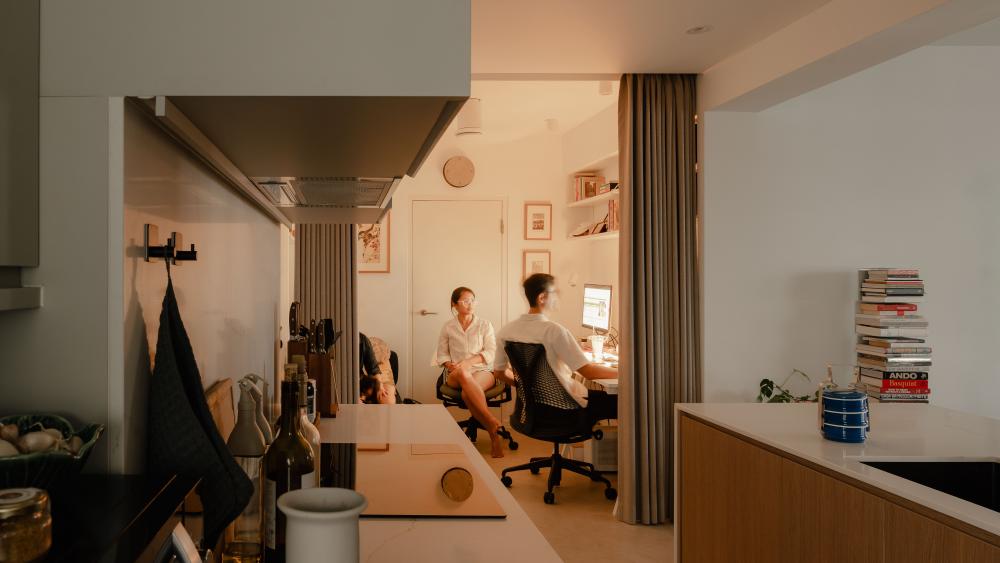
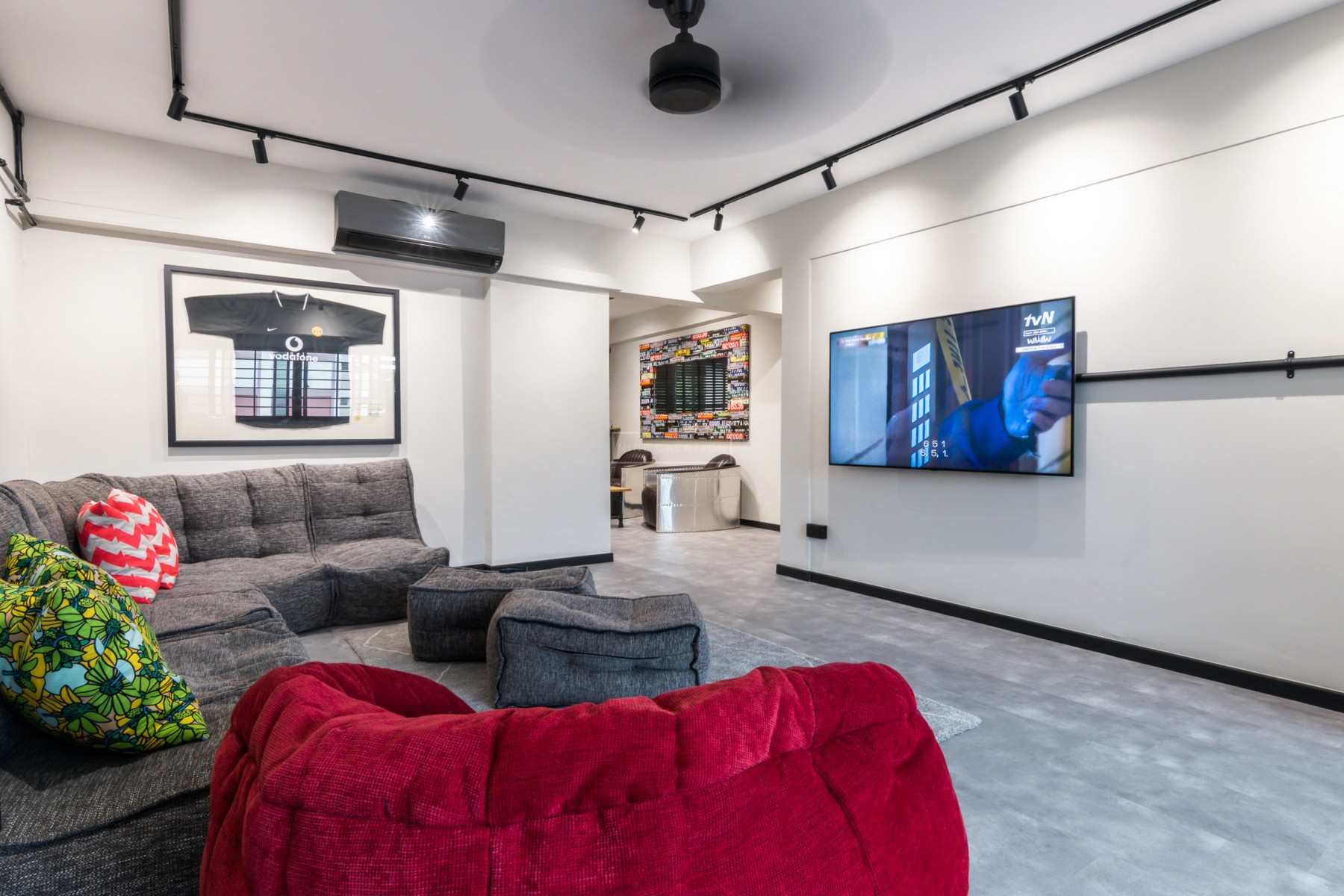
89 Dawson ($80,000) by Majestic Construction Engrg
If you are mostly on calls and doing lightweight laptop work, a compact 90cm desk tucked into a corner might be all you need. If you work with multiple screens, physical documents, or creative materials spread across a surface, you will need something more substantial.
It also helps to think about the future, not just today. Are you likely to shift to full-time WFH at some point? Do you expect to need more equipment or storage as your role evolves? Getting clear on this before you renovate helps you avoid both over-spending on a setup that is bigger than necessary and under-investing in one that leaves you frustrated within a year.
Smart Ways to Carve Out a Work Zone
The approach that makes sense for your flat depends a lot on how many rooms you have and how your household uses them day to day. There is no single formula, but there are a few tried-and-tested strategies worth knowing.
The Dedicated Study Room
If you have a spare bedroom that is not being used, converting it into a proper home office is usually the most effective option. A dedicated room gives you a door you can close, which is invaluable if you share your flat with a partner, children, or parents.
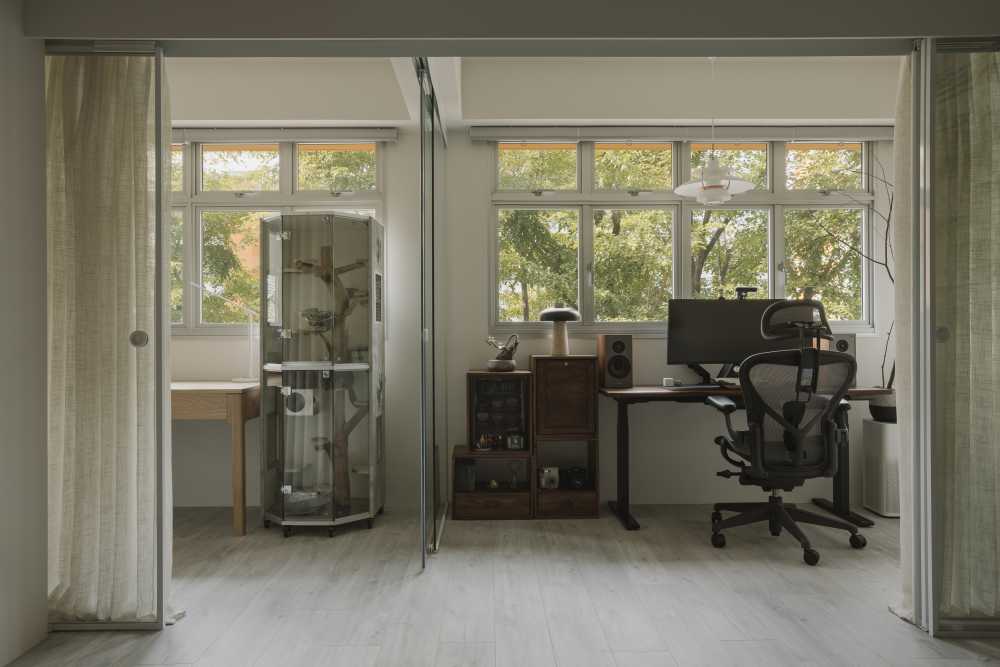
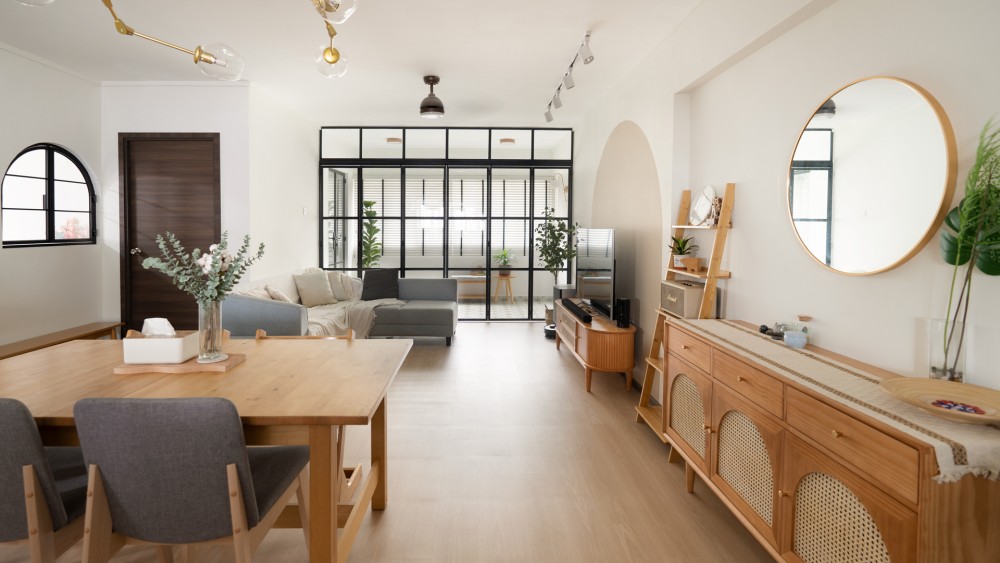
9 Joo Seng Road ($90,000) by The Interior Lab Pte Ltd
You also have full control over the layout, storage, and lighting without needing to work around the rest of the flat. For homeowners in 4-room or 5-room HDB flats, this is often the most straightforward path to a functional, distraction-free workspace.
If the room also needs to serve as a guest room occasionally, a sofa bed or a wall-mounted Murphy bed lets you keep both functions without permanently sacrificing one for the other. The key is to design primarily around the work function, since that is what the room will be used for most of the time, and let the guest function be secondary.
Alcove and Nook Conversions
Many HDB flats have underused corners, recesses near windows, or transitional spaces between rooms that can be transformed into a compact work nook. A built-in desk fitted into an alcove, for example, takes up almost no floor space and can be designed to feel intentional rather than like an afterthought.
These nook setups work particularly well in 3-room flats where a full spare room is not an option. With the right shelving above and good lighting, even a 1.2-metre-wide corner can become a genuinely productive workspace.
Multifunctional Living and Dining Setups
For homeowners who do not have a spare room and cannot commit to a fixed nook, building flexibility into the living or dining area is another option. A fold-down wall desk, a console table that doubles as a workstation, or a dining table paired with a good ergonomic chair can all work reasonably well, especially if your WFH days are part-time.
The key is designing the space so that work can be packed away cleanly at the end of the day, keeping the boundary between work mode and home mode as clear as possible.
Furniture and Storage That Work Hard in Small Spaces
In a compact HDB flat, every piece of furniture needs to earn its place. The right choices make a workspace feel considered and calm. The wrong ones make a small room feel cluttered and chaotic.
Desks That Do Not Dominate the Room
A bulky L-shaped desk might look great in a showroom, but in a 10sqm study or a shared living room, it can overwhelm the entire space.
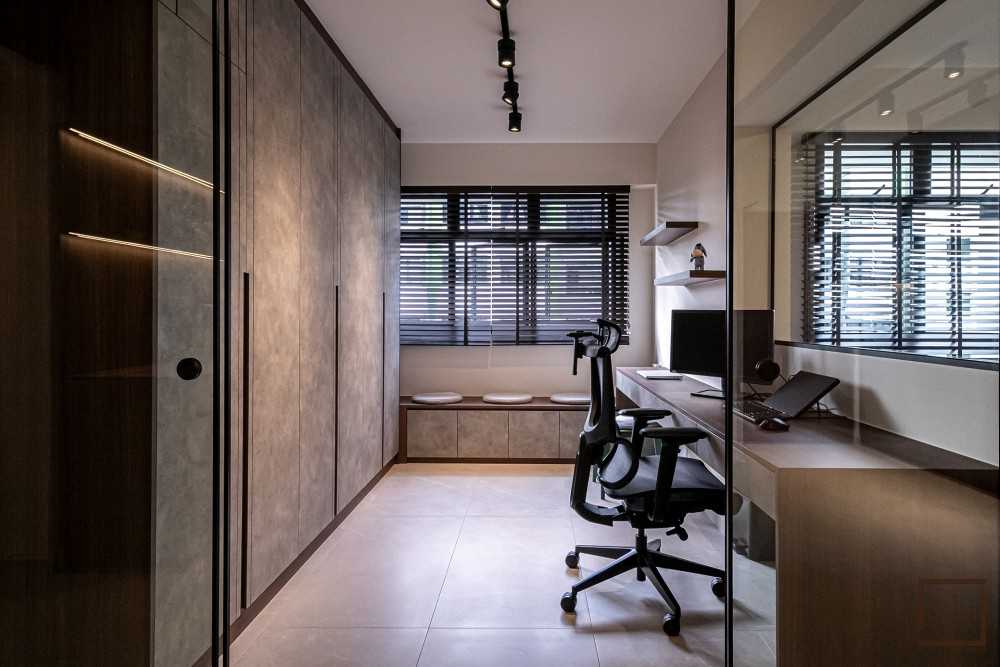
4 Room BTO @ Bidadari ($75,000) by Space Atelier Pte Ltd
For smaller rooms, a slim straight desk between 100cm and 120cm wide is usually the sweet spot — enough surface area to work comfortably without taking over the room. Wall-mounted or fold-down desks are worth considering if you need the space to serve another purpose when you are not working.
If you work from home full-time and have room for it, a height-adjustable standing desk is a worthwhile long-term investment. Alternating between sitting and standing throughout the day reduces fatigue and is much better for your body over time. Prices for decent motorised standing desks have come down significantly in recent years, and several local furniture retailers now carry them at accessible price points.
Storage Solutions That Keep Work Clutter Out of Sight
Clutter is one of the biggest enemies of focus, and in a home office that shares space with the rest of your life, it builds up fast. Built-in shelving above the desk keeps reference materials and stationery within reach without spreading across the floor. Closed cabinets or drawer units are better than open shelves if you want the room to feel tidy when you step away from work.
Cable management is also worth thinking about from the start. Routing cables neatly through grommets or cable trays takes a bit of effort upfront but makes a huge difference to how the workspace looks and feels day to day. If you are doing a full renovation, ask your ID or contractor to factor in sufficient power points near the desk — running extension cords across the floor is both untidy and a tripping hazard.
Lighting, Acoustics, and the Details That Matter More Than You Think
Once the layout and furniture are sorted, it is tempting to call it done. But lighting and noise management are two areas where a small amount of attention delivers an outsized improvement to how well you can actually focus.
Getting Your Lighting Right
Singapore’s natural light is generous, but it can also create harsh glare on screens, especially in west-facing rooms during the afternoon.
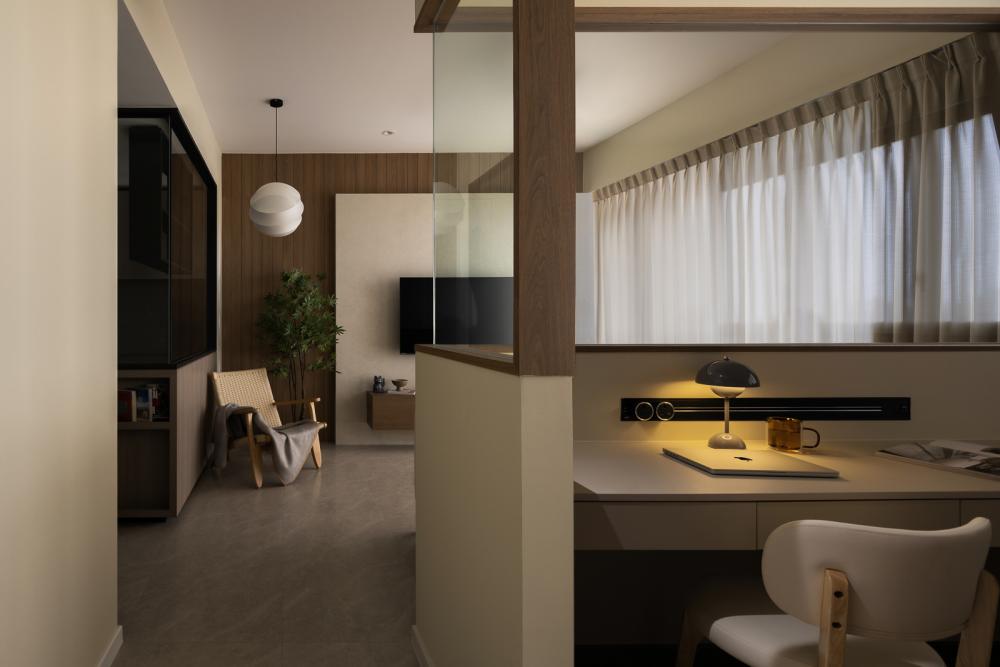
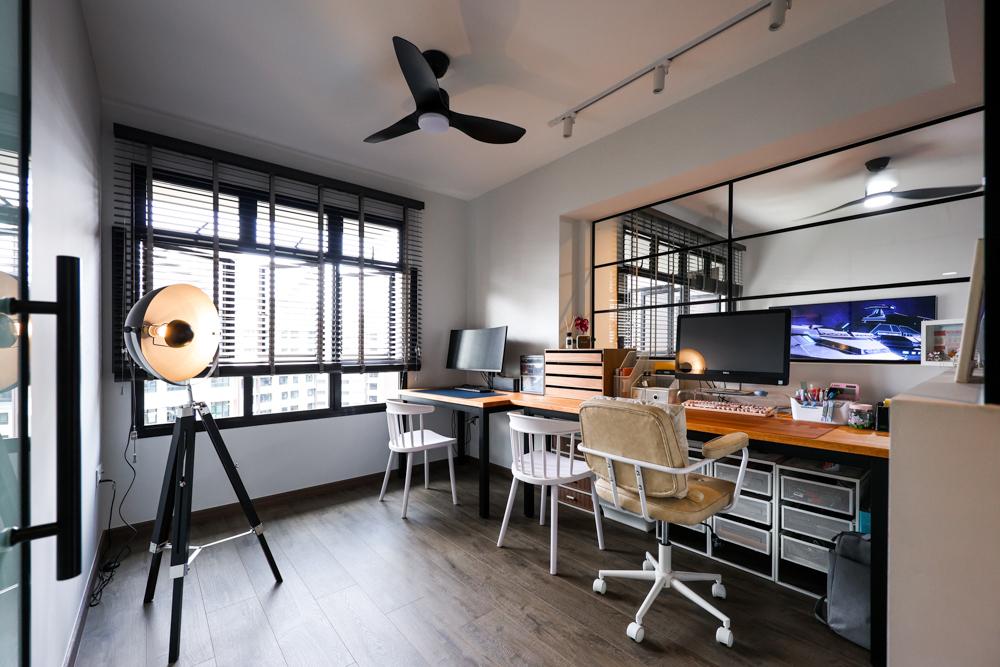
Ki Residences ($36,000) by BY: DAN & CO
Positioning your desk so that natural light comes in from the side rather than directly in front of or behind your screen is a good starting point. If your flat does not give you much flexibility on desk placement, a good quality anti-glare screen protector is an inexpensive fix worth trying.
For artificial lighting, a dedicated desk lamp with adjustable colour temperature lets you shift between cooler, more energising light during work hours and warmer light in the evenings. Overhead lighting alone is rarely sufficient for focused desk work, and relying solely on it often leads to eye fatigue by mid-afternoon. A task lamp is not a luxury here — it genuinely changes how comfortable the workspace feels over a long day.
Managing Noise in an HDB Environment
HDB living means shared walls, corridor noise, and the general sounds of a dense residential environment. If your work involves a lot of calls or deep focus work, noise management is worth addressing directly.
Soft furnishings like rugs, curtains, and upholstered chairs all help absorb sound within the room. A good pair of noise-cancelling headphones is one of the most cost-effective tools for blocking out household noise during work hours, and doubles as a clear signal to the people around you that you are in focus mode.
For homeowners doing a full renovation, acoustic panels or heavier wall finishes in the study can make a more lasting difference. This is especially useful if your study shares a wall with a common living area or if you have young children at home. It is more of a considered upgrade than a must-have, but for people who work from home every day, it is one that pays off.
Wrapping Up: The HDB Home Office Guide
Getting your home office right does not require a large flat or a big budget. It requires being honest about how you work, making deliberate choices about your space, and sweating the details that actually affect your daily comfort and focus. Even small, well-considered changes can turn a frustrating WFH setup into one that genuinely supports you.
Want to check out home renovation projects for more inspiration? Browse home office ideas on Hometrust, or click the button below to get connected with expert designers!
Renovating soon? Speak to top rated interior designers.
Discuss your home renovation ideas and plans with top rated firms, recommended by past homeowners. Let us help you shortlist the most suitable interior designers for your project.