How Gen Z Homeowners Are Renovating Differently in Singapore
The homes belonging to younger owners look and feel different from the sleek, matched-set interiors that dominated a few years ago. There’s more personality, more colour, more intentionality — and often, a corner of the home that doubles as a workspace for something entrepreneurial.
Gen Z homeowners, broadly those born between 1997 and 2012, are starting to receive their BTO keys or pick up resale flats, and the way they are approaching renovation reflects a generation that grew up with infinite design inspiration at their fingertips and a healthy scepticism of doing things the conventional way.
In this article, we take a closer look at what makes Gen Z renovators tick, from the aesthetics they love to how they furnish their homes and design for the way they actually live.
Who Are Gen Z Homeowners in Singapore?
The oldest Gen Zs in Singapore are now in their mid to late twenties, which means a growing number of them are navigating the BTO ballot, collecting keys, and figuring out how to turn a bare concrete shell into a home.
Many are renovating on tighter budgets than previous generations, not because they earn less necessarily, but because renovation costs have risen sharply in recent years. A typical HDB renovation today can easily run between $50,000 and $100,000 for a 4-room flat, and Gen Z homeowners are acutely aware of this.
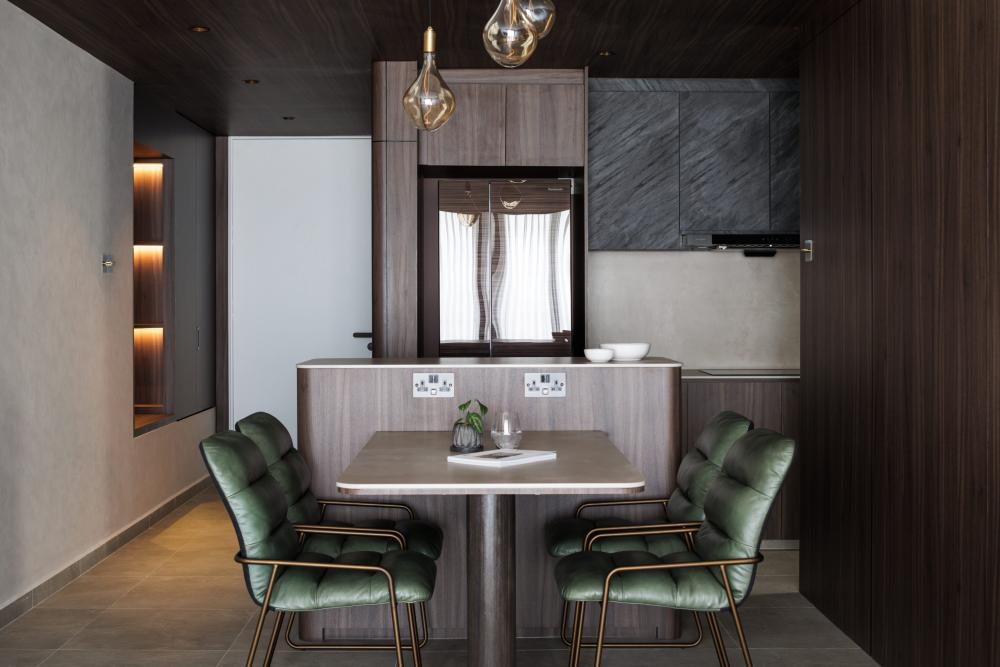
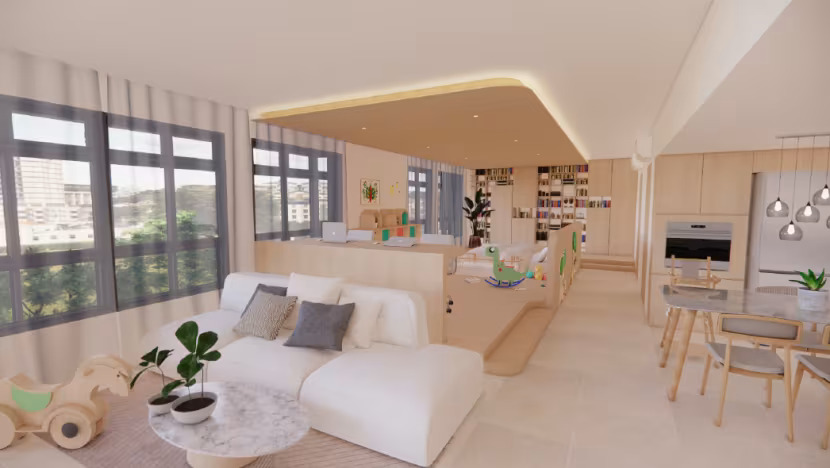
Southbank ($150,000) by Kanso Haus Studio
What sets them apart from Millennials is less about income and more about values and priorities. Millennials who renovated in the 2010s tended to gravitate towards complete, cohesive design packages: full carpentry, matching furniture sets, a clearly defined theme like Scandinavian or industrial carried through every room.
Gen Z is less interested in that kind of uniformity. They want their home to feel like them, not like a showroom, and they are willing to take a more piecemeal, experimental approach to get there.
The Aesthetics They Are Gravitating Towards
Gen Z homeowners are not following a single design playbook. Instead, a few strong aesthetic threads have emerged across their homes, shaped by nostalgia, individuality, and a resistance to anything that feels too safe or predictable.
Retro, Y2K and Eclectic Influences
Browse enough Gen Z renovation accounts and a few aesthetic threads start to emerge. There is a strong pull towards retro and Y2K references: think rounded furniture silhouettes, warm amber and terracotta tones, chunky vintage-inspired lamps, and the occasional piece that looks like it was lifted straight from a 1970s living room.
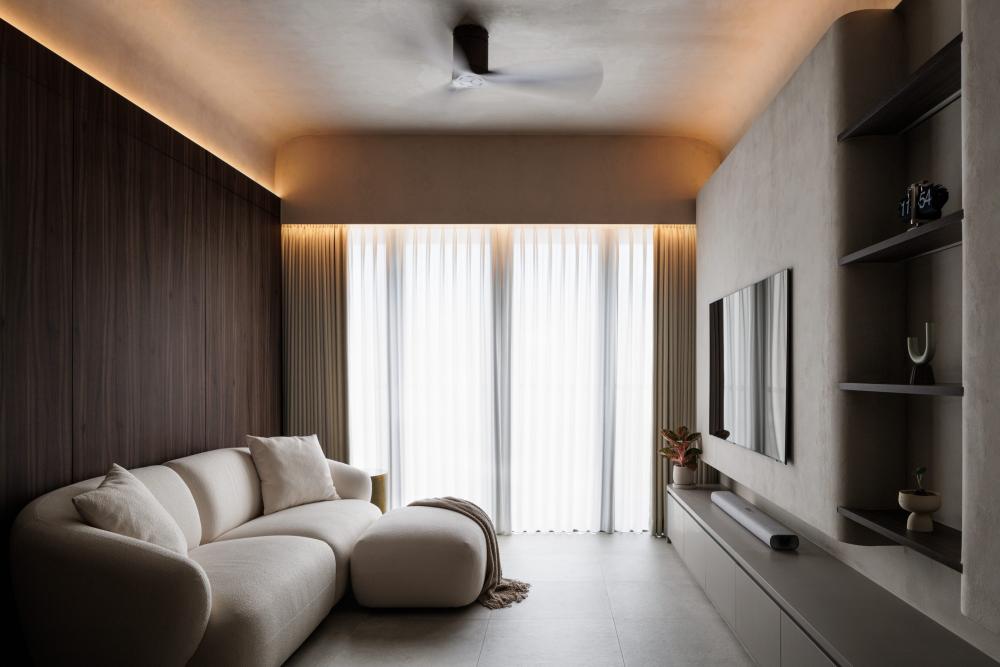
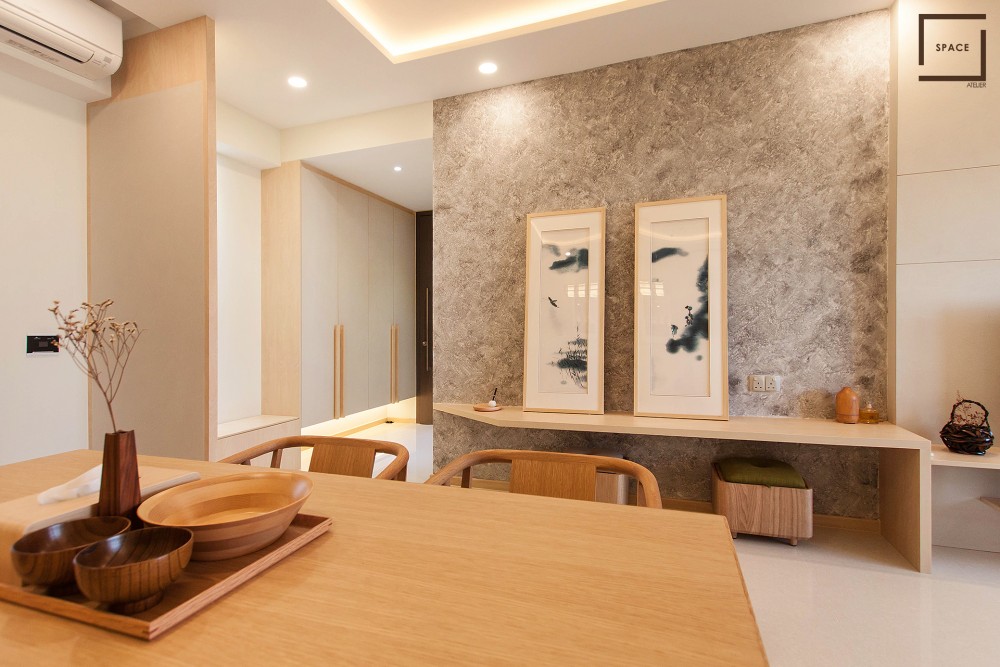
Southbank ($150,000) by Kanso Haus Studio
These are not accidental choices. Gen Z has grown up consuming nostalgia-driven content and has developed a genuine appreciation for design from earlier decades, recontextualised into modern Singapore homes.
The eclectic style is also extremely popular among this cohort. Rather than committing to a single design language, many Gen Z homeowners are mixing references freely: a mid-century modern sideboard next to a contemporary sofa, vintage artwork hung above a sleek floating TV console.
This approach requires a good eye and a certain confidence in one’s own taste, both of which Gen Z tends to have in abundance after years of curating their own digital aesthetics.
Bold Statements Over Full Theme Renovations
Rather than renovating every surface to match a single theme, Gen Z homeowners tend to make deliberate, high-impact choices in select areas and keep the rest simple.
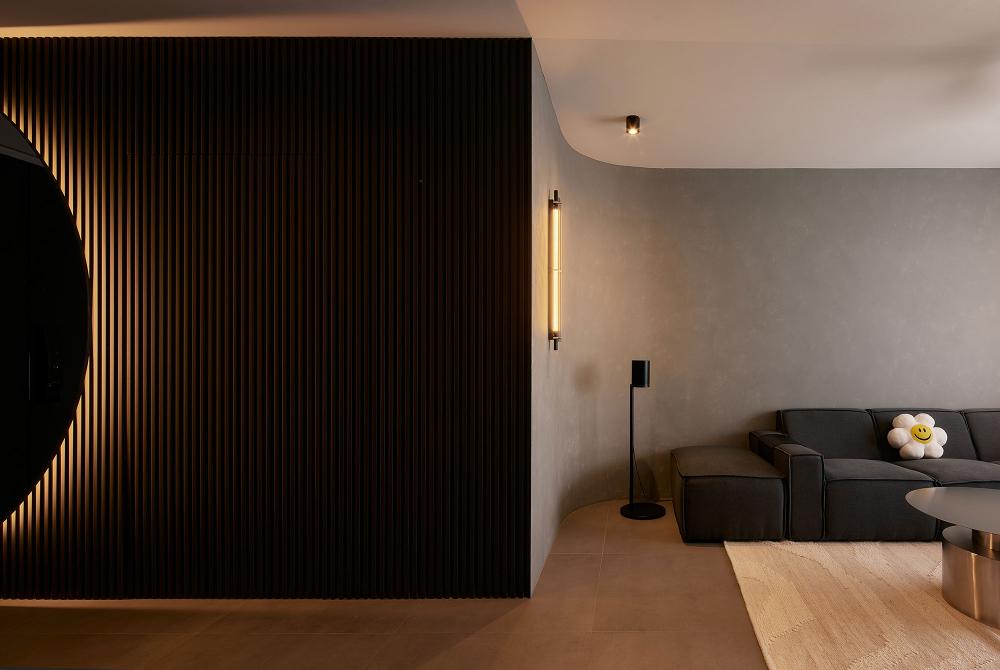
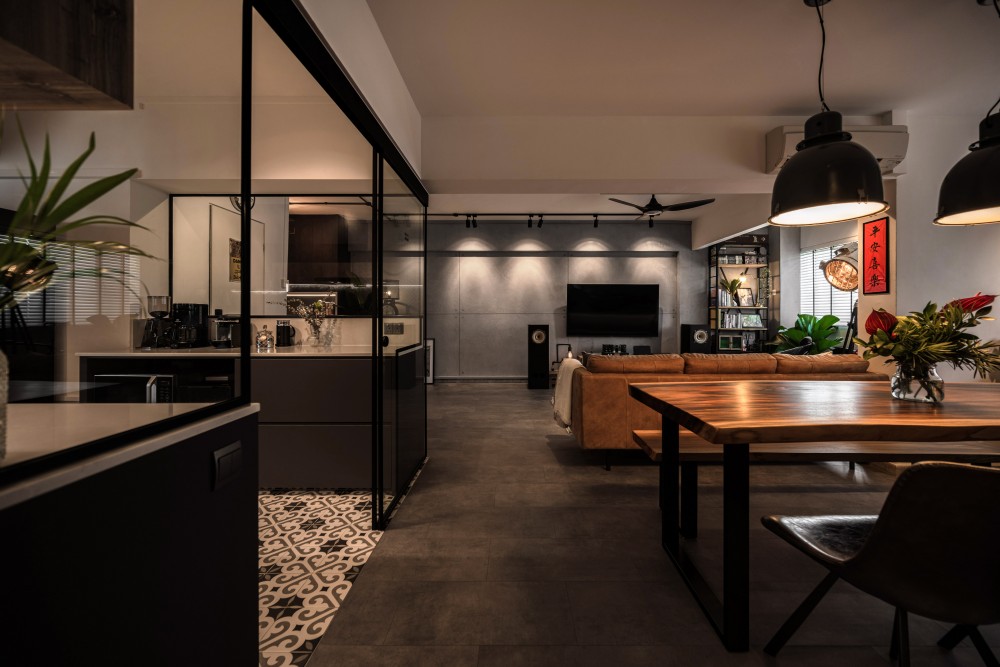
Punggol Point Cove ($85,000) by Page Studio
A single dramatically coloured feature wall in the living room, an arched doorway created with a partition, or a maximalist gallery wall in the bedroom: these are the moves that define the space, without requiring an enormous budget or a full commitment to one look.
This approach is also practical. When you are renovating a 3-room or 4-room HDB flat for the first time and watching your budget carefully, concentrating your design energy on a few key moments is a smart way to create a home that feels considered without overspending on carpentry and finishes throughout.
Thrifting and Secondhand Furniture as a Lifestyle
For many Gen Z homeowners, how you furnish your home is just as much a statement as how you design it.
Buying secondhand is not a budget compromise for this generation: it is a deliberate choice rooted in values around sustainability, individuality, and the joy of finding something genuinely unique.
Why Gen Z Prefers Carousell and Flea Markets
Ask a Gen Z homeowner if they plan to head to IKEA and fill their cart with a full living room set, and many will wrinkle their nose.
It is not that they have anything against flat-pack furniture categorically, but the idea of a home filled entirely with pieces that look identical to everyone else’s does not appeal to them. This generation places enormous value on individuality, and their furniture choices reflect that.
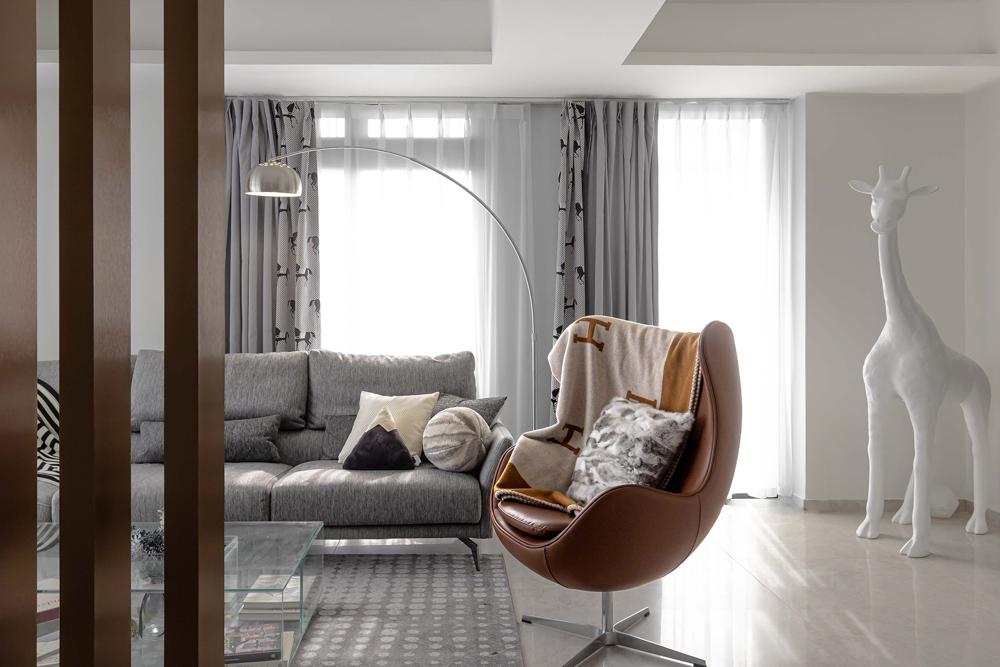
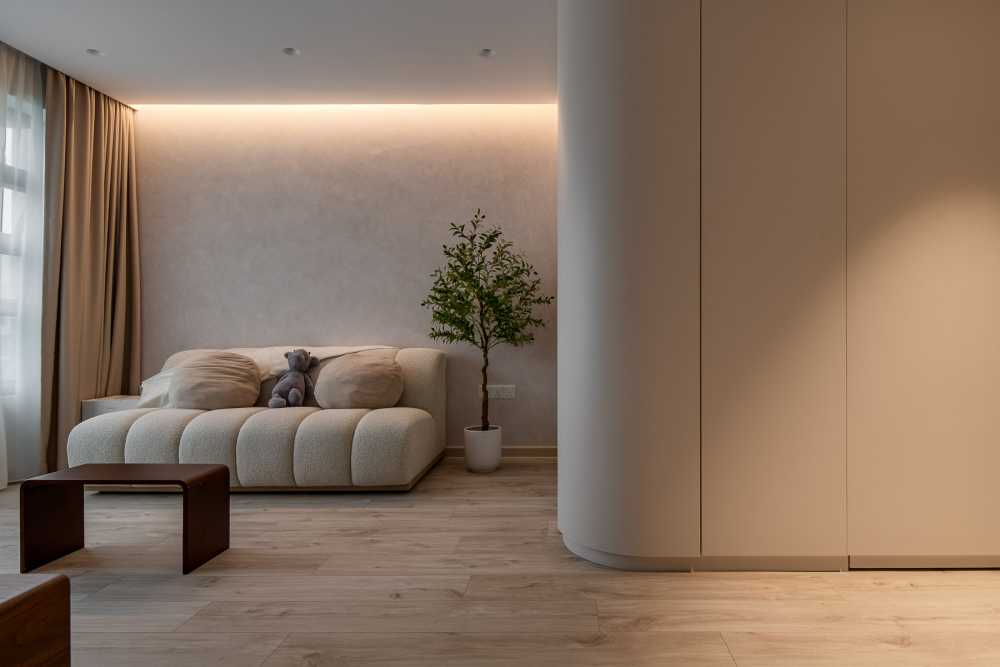
3-Storey Penthouse ($150,000) by Noble Interior Design
Platforms like Carousell, Facebook Marketplace, and local flea markets at venues like Scape or various weekend pop-ups have become serious furniture sourcing destinations for Gen Z renovators.
They are hunting for vintage sideboards, pre-loved rattan chairs, ceramic lamp bases, and one-off decorative pieces that carry some history and character. The thrill of the find is part of the appeal, and so is the story behind the piece.
How Thrifted Pieces Add Character
There is a reason that a secondhand teak sideboard from the 1960s looks more interesting in a home than a brand new one from a mass-market furniture store. Age, patina, and slight imperfections give a piece warmth that is difficult to manufacture.
Gen Z homeowners understand this intuitively, and they are skilled at combining thrifted finds with newer, more functional pieces to create a layered, lived-in look that feels authentic rather than assembled.
Making It Work in an HDB or Condo
The key to incorporating thrifted furniture into a Singapore home is scale and functionality. HDB flats and condos are compact, so every piece needs to earn its place.
A beautiful but oversized vintage wardrobe might overwhelm a standard HDB bedroom. The trick is to prioritise smaller statement pieces, such as side tables, accent chairs, lamps, artwork, decorative objects, and keep larger furniture like sofas and beds more streamlined. This way, the thrifted elements add personality without making the space feel crowded or chaotic.
Designing for Your Side Hustle
One of the most distinctly Gen Z renovation considerations is the side hustle space. This generation is notably entrepreneurial, and a significant number of them are running small businesses or content creation projects from home.
When they renovate, these needs are baked into the design from the start rather than bolted on as an afterthought.
Home Cafes and Baking Setups
The home cafe trend has taken off strongly in Singapore over the past few years, and a disproportionate number of the people behind these setups are Gen Z homeowners.
Whether it is a dedicated pour-over coffee corner in the kitchen, a full baking station with open shelving for mixers and ingredients, or a styled countertop that doubles as a product photography backdrop, these spaces are designed to be both functional and visually presentable.
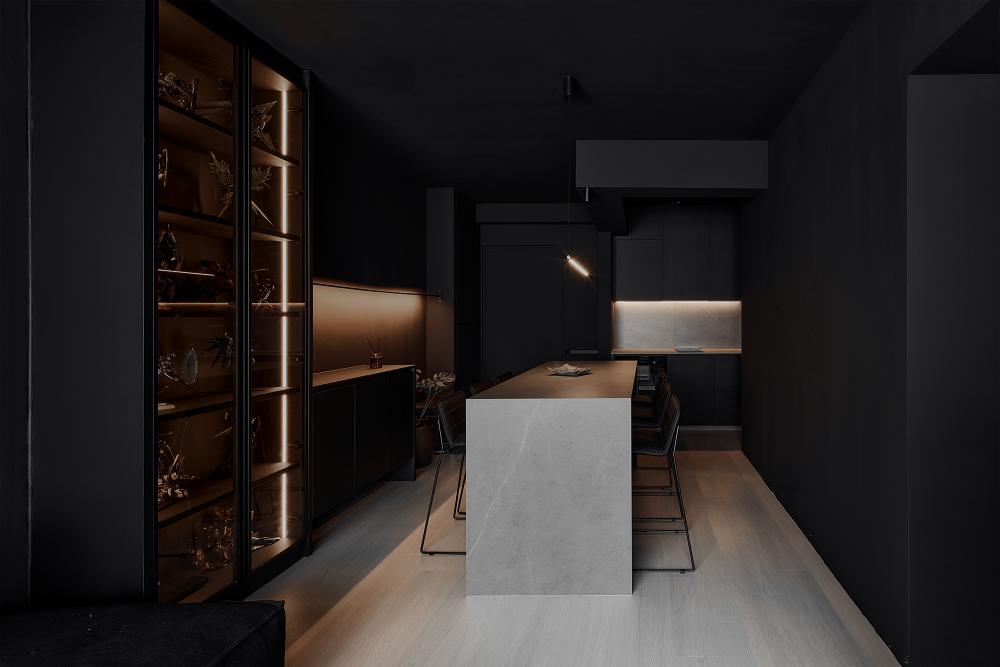
Boon Lay Meadow ($55,000) by Page Studio
For HDB homeowners pursuing this, the wet and dry kitchen layout is particularly useful. The dry kitchen area can be styled freely as a cafe-inspired space for content creation and hobby use, while the wet kitchen handles the heavier cooking.
Investing in good countertop materials, open shelving, and warm lighting in this zone makes a significant difference to both the aesthetic and the functionality.
Livestream and Content Creation Corners
Singapore has a growing community of content creators, streamers, and online sellers, many of them Gen Z. Designing a functional, camera-ready corner into a home renovation is increasingly common.
This might mean a well-lit nook in the study or bedroom with a clean, styled backdrop, good overhead or ring lighting built into the ceiling plan, and cable management considered from the start so the space never looks messy on screen.
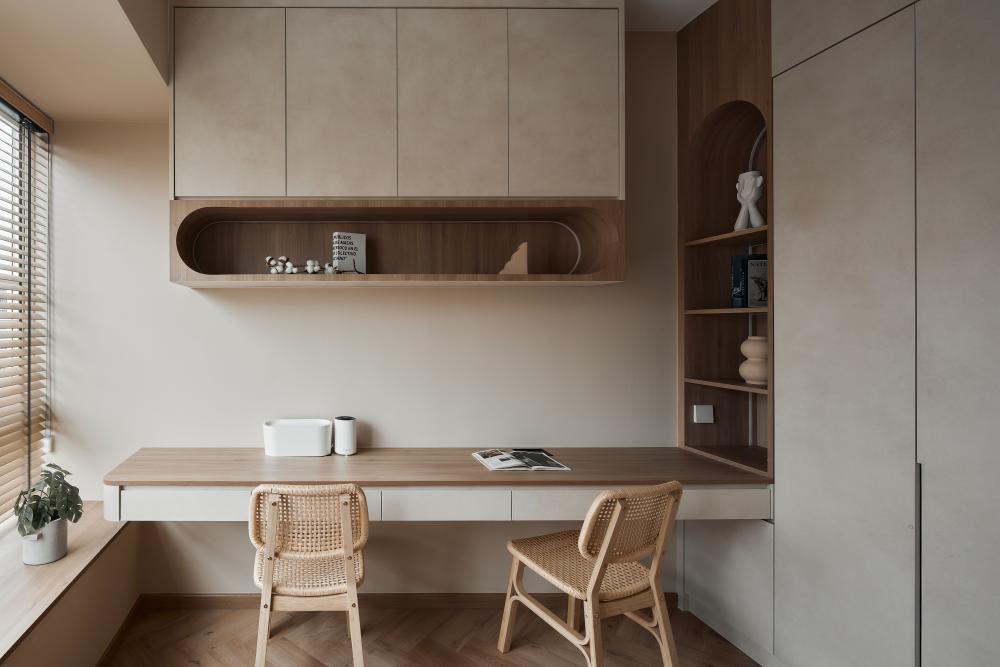
6 Bishan Street ($120,000) by Ecasa Studio
For those who do live selling or streaming on platforms like TikTok Shop or Shopee Live, storage for inventory is another practical consideration. Built-in shelving or a dedicated storage area near the content creation space keeps things organised and accessible without taking over the entire home.
Making Entrepreneurial Spaces Feel Intentional
The risk with designing for a side hustle is that the space starts to look cluttered or out of place with the rest of the home. The solution is to treat the work corner with the same design intention as any other part of the flat.
Choose a colour palette and shelving style that ties into the broader aesthetic of the home, keep surfaces clean and edited, and use closed storage for anything that does not need to be on display. A well-designed work corner can be one of the most characterful parts of a Gen Z home rather than an eyesore tucked into a corner.
How Gen Z Approaches the Renovation Process
Beyond aesthetics and furniture choices, Gen Z also does things differently when it comes to the renovation process itself. They are more informed, more selective, and more willing to take an unconventional path to get the outcome they want.
Research-Heavy, Community-Driven
Gen Z does not walk into a renovation blind. Before a single contractor is engaged, most have spent months consuming renovation content on TikTok, saving references on Pinterest, and reading threads on HardwareZone or Reddit Singapore.
They arrive at ID consultations with detailed mood boards and specific questions. This makes them well-informed clients, but it also means they are quick to spot when advice is generic or when a recommended product is being pushed because of margin rather than quality.
Selective About Interior Designers
While many Gen Z homeowners do engage interior designers, they tend to be more selective and more likely to consider partial renovation packages or to self-manage certain aspects of the project.
Some opt to hire contractors directly for specific works like hacking, flooring, or painting, and then source and style furniture themselves. This hybrid approach can result in significant cost savings and gives them more control over the final outcome.
Phased Renovations
Perhaps the most financially savvy tendency among Gen Z renovators is the willingness to phase their renovation over time.
Rather than trying to complete everything before moving in, many will prioritise the essentials, including kitchen, bathroom, flooring, and key built-ins, and then add furniture, lighting, and decor gradually over the first year or two of living in the space. This approach reduces upfront financial pressure and allows the home to evolve organically as their tastes and needs develop.
A Home That Reflects Who You Are
Gen Z’s approach to renovation is reshaping what a first home in Singapore can look like. Driven by personality, resourcefulness, and a clear sense of how they actually want to live, this generation is proving that a meaningful, characterful home does not require a massive budget or a cookie-cutter design package.
Whether you are a Gen Z homeowner just starting out or simply curious about where residential design in Singapore is heading, there is a lot to observe in how this cohort is making their spaces their own.
Want to check out home renovation projects for more inspiration? Browse interior design ideas on Hometrust, or click the button below to get connected with expert designers!
Renovating soon? Speak to top rated interior designers.
Discuss your home renovation ideas and plans with top rated firms, recommended by past homeowners. Let us help you shortlist the most suitable interior designers for your project.