As much as we would like to say our renovation process was a smooth and enjoyable one, it was sadly not. My wife and I met with several IDs before shortlisting David. His quotation was by no means the cheapest one, but initial impression of him was relatively good. We found it strange that we could not find any recent reviews or projects by Flo Design under David, with the last being in 2019. But he was supposedly a ‘Senior Design Consultant’ so we thought he should have a good amount of experience and we felt he seemed responsible enough to manage the project well and ensure quality products with good standard was delivered, which was one of the main things we were looking for in an ID. We could not have been more mistaken.
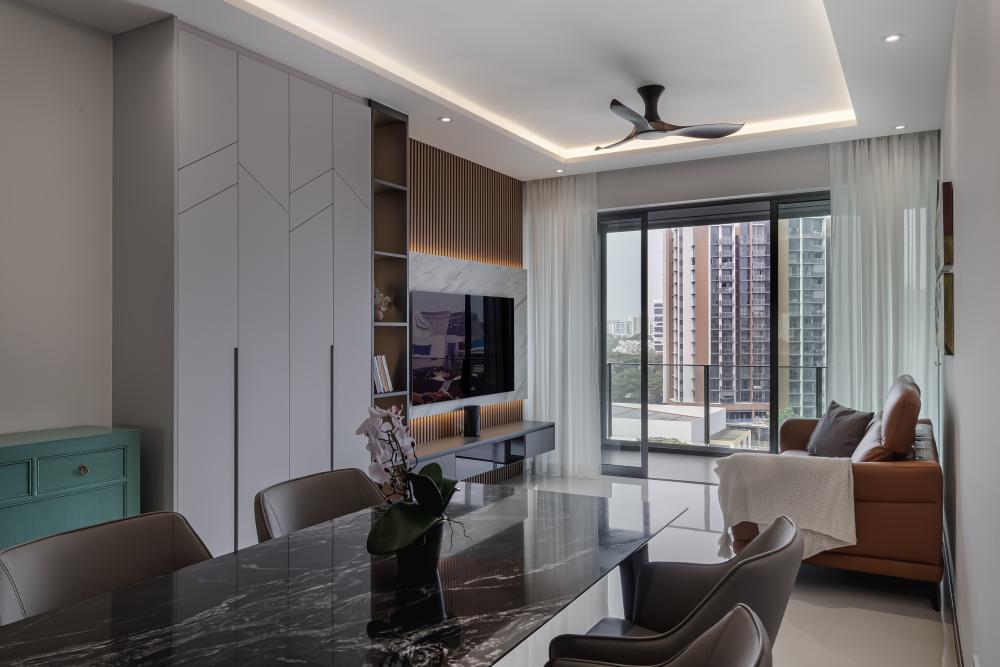
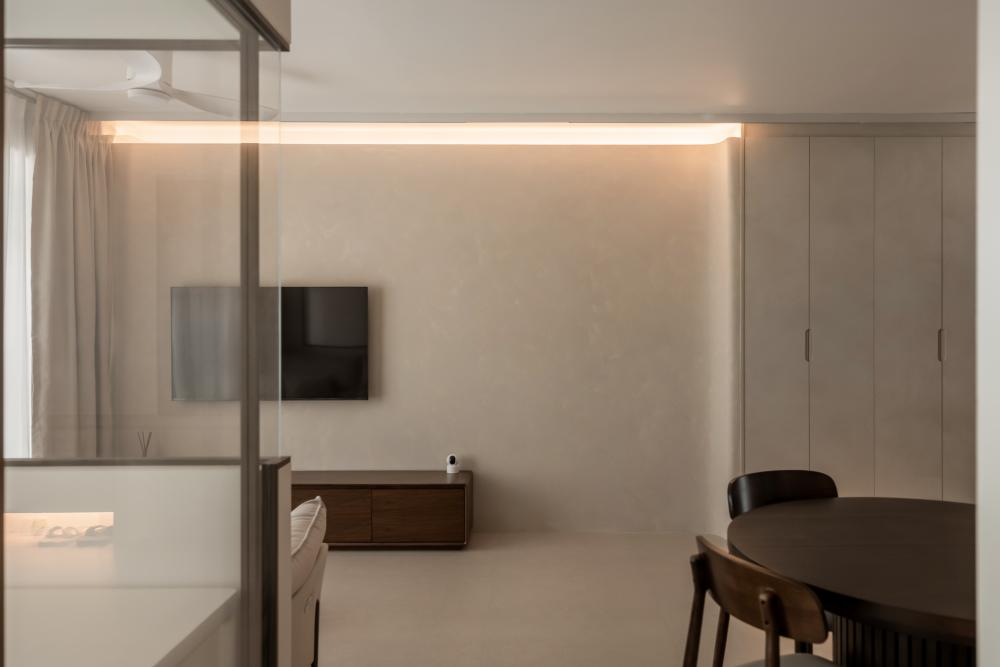
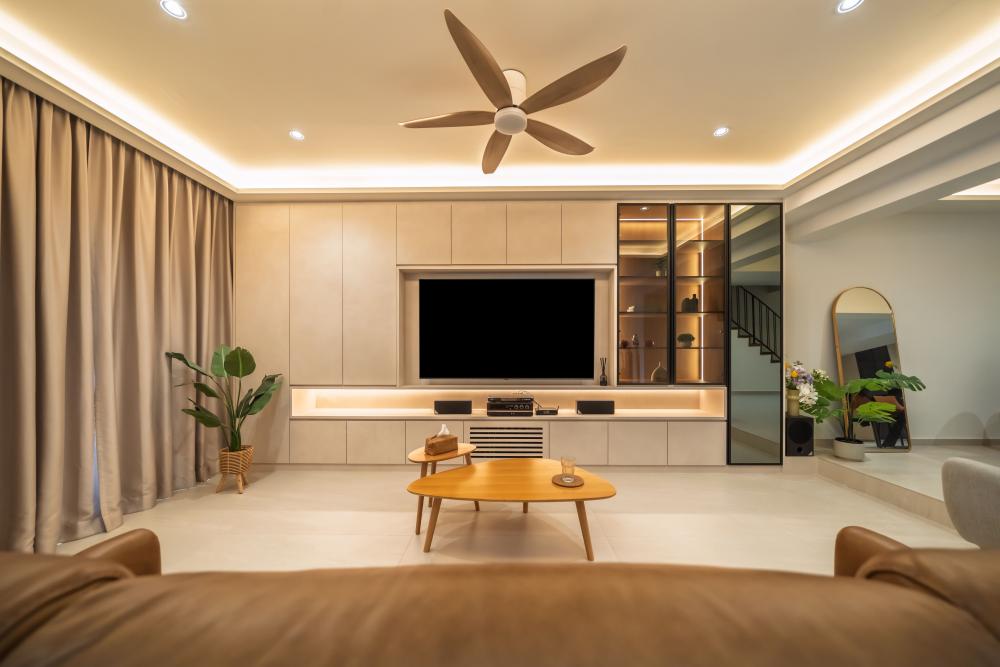
Going into the project, my wife and I had most of the house designs already planned out. We selected the tiles on our own, planned and drew out detailed sketches of our built-in carpentry layout and designs for the bedrooms and kitchen, as well as had the colour scheme for the entire house thought out. We intended to keep the design simple, without any fancy bells and whistles. We did not hack any walls, no open concept kitchen or island top, no fluted panels or concealed doors. The most ‘unique’ elements in our house were a TV feature wall and an L-box cove lighting. We just wanted the ID to manage the project and the contractors well and ensure good standard workmanship and products were delivered.
Project management is something that needs to be improved. Mistakes and lapses are normal and expected during the renovation process. Some lapses include wrongly drilling the walls for the aircon trunking and not as per what was discussed earlier on, instructing the plumber to lay the pipes for the shower mixer on the wrong wall, in front of the swinging glass door, forgetting that we were installing curtains and not blinds in the hall and rooms, despite having prior discussions on the mounting position, resulting in the contractors to wrongly install the pelmet. Minor lapses that are caught by us early on and are easily rectifiable are still considered ‘acceptable mistakes’, but there were some that caused unnecessary delays in the project, such as the pelmet, were the contractors needed to come down twice again to make the corrections. If a relatively straightforward project like ours can be managed so poorly, I do not know how more complex renovation projects are being handled. Attention to detail was really lacking. Even the final handover form had spelling errors, and I feel that shows a lot.
Workmanship was probably one of the biggest issues with this project. From tiling and grouting works, to air-conditioning works and especially the painting work, there were issues with workmanship in almost every phase. Air-con trunking works were done with very poor quality. Damaged and cracked trunking was the main issue we had. When questioned about this poor quality, ID kept assuring us that works were not yet completed and they would ‘make it nice’. Our issue was that if the trunking was already damaged and cracked, even if you silicone and paint over it to make it look okay, the trunking underneath is still damaged. We insisted that they replaced and redid the damaged portions of the trunking and was assured by ID that it would be replaced. We still saw the cracked trunking on the last day that the air-con contractors were scheduled to do the final touch-ups and after completing their works, we questioned ID if it was replaced and he said the contractors did replace it and we left it as that.
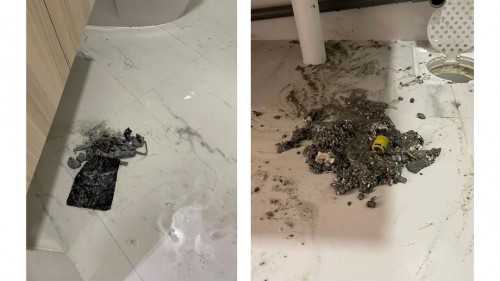
Painting works had plenty of issues. Being an older HDB flat, the walls were definitely not in the best condition. There were cracks and chips along the wall and holes where the previous owners drilled and mounted items. Prior to the painting works, we did ask if these would be touched-up by the painters before painting the walls. ID assured us that they would do their best to make it smooth before they painted. While we did not have the expectation that the walls would be perfectly smooth like a plastered wall, the standard of the painting works was almost non-existent. It was an extremely sloppy job. Old screws, nails and door stoppers on the walls were not even removed but just painted over. Some holes were not puttied before painting the wall, leaving the hole just there. Chips and cracks on the walls were not touched-up. In one of the rooms, there was a huge lump of putty left at the skirting. After scrapping the putty, we realised there was an old antenna cable sticking partially out of the wall and instead of removing it, the contractors perhaps decided that it was more convenient to just slap some putty over to cover it. When questioned about the issues, ID said that the additional putty works to touch-up cracked of chipped walls or uneven wall surfaces fell under a plastering contractor and it is not the painters’ job to do so. Any putty works they have done so far was out of ‘goodwill’. If that was the case, why give the assurance that the painters would do their touch-up works before painting in prior discussions? In the end, we incurred additional costs to engage another painter that my family usually uses when we did painting works, who does putty works to smoothen walls and repair chipped walls before painting, to repaint the entire unit.
Professionalism was also something lacking. We found the ID to be extremely defensive whenever we pointed out mistakes or any issues spotted. ID would always strongly attempt to justify it and at regularly attempt to say that ‘it is normal for it to be like that’. A common excuse used whenever issues were spotted was that the works were not completed yet and would be touched-up again at a later date and when questioned towards the end of the project when these issues were still not rectified, ID would get very defensive and have many reasons and excuses as to why it cannot be done. The painting works is one example of this.
During early discussions, ID said that contractors we engaged outside for specific works (e.g. curtains and ceiling fans in our case) were not his responsibility and we would manage them ourselves but he would be answerable for contractors engaged through him (e.g. electrician, tilers etc). After lighting installation was complete, we found issues where the cove lighting was not turning on evenly, where one side of the wall would turn on faster than the other side. We have seen enough cove lightings in showrooms, at home and at friends’ homes to know that this is not normal. When issue was raised, ID again got defensive and tried to explain that having delays was normal and that it is just how the lighting works. When we further insisted that it was not acceptable, ID said that normally when there are issues or defects, the homeowners would approach the contractor directly. We found that comment to be extremely ridiculous. If that were true and we should approach the contractors directly, why would we even engage an ID in the first place? ID eventually got the electrician to come down again to rectify the uneven lighting up issue. Instead of always arguing or attempting to justify, why not just arrange for the relevant contractor to come down for an inspection or rectification when the client is unsatisfied with the delivered product or quality of work?
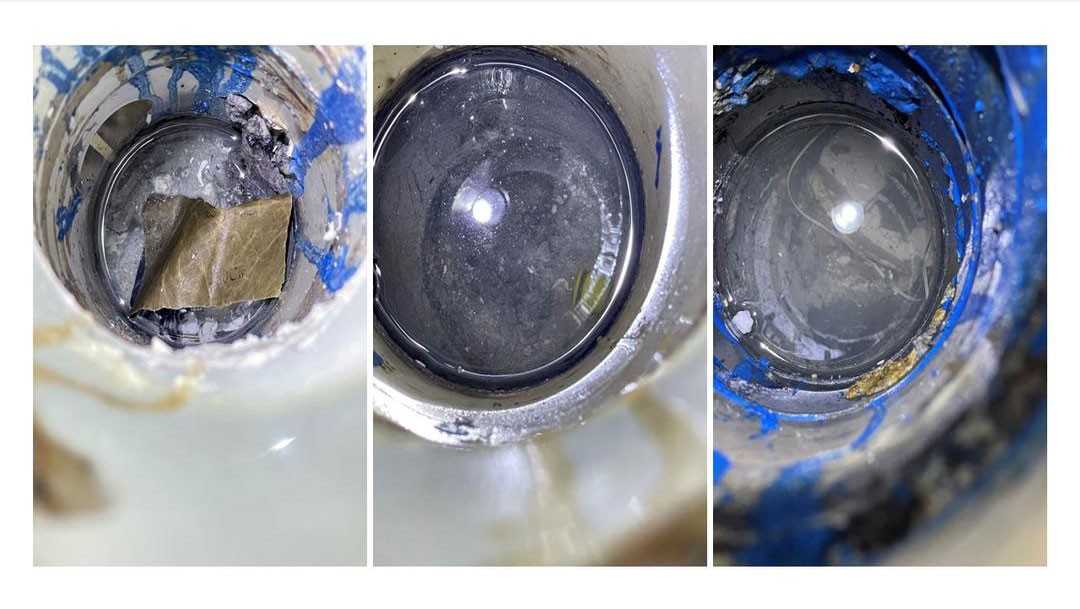
While we understand that the cleaning works in renovation process is not a very thorough one, an area that we had insisted must be cleaned from the start of the renovation process was the drainage holes around the house. With all the hacking works, plenty of debris and sediment would have fallen in which can result in drainage issues down the road. ID assured us plenty of times that the drainage holes would be cleaned but of course this was not done as well. Plenty of debris, sediment, and trash such as screws, pieces of rubber and plastic and even a sheet of sandpaper can be seen. When questioned why this work, something that we had insisted plenty of times before and was assured would be carried out, was not done, ID was extremely defensive, saying he never heard of this works being carried out before and that if there are drainage issues, there is a 1 year warranty period by the company. Our point was that if there are works that are not done well, or issues raised by the homeowners, why not just rectify them and handover the project in a good condition rather than delivering a sub-par product and insisting that there is a 1 year warranty should there be faults in the future. In addition, why give countless assurances that such works would be carried out when we asked in the first place. Cleaner subsequently came down for another session and removed the debris in the drainage holes. When we asked, the cleaner said it was a common job and he had done so many times before, so it cannot be that uncommon of a request and expectation.
From my understanding, we thought an ID managing a project would usually do an inspection after each phase of work was carried out to ensure it is up to standard and there are no issues with the workmanship. It was only when we questioned the ID why there were so many issues with workmanship and if he did check the contractors’ work, that we realised that such inspections were not done. ID said that ‘normally’ homeowners would check the work themselves and if there were any mistakes, the ID would get the contractor to rectify the area. As my brother and my family usually engages contractors directly during home renovation work and have never engaged an ID before, we do not know if this is the norm or the standard practice but it was definitely not what we had expected. If the client has little knowledge on renovation, or has a busy schedule and is unable to inspect the unit frequently, wouldn’t mistakes and irregularities be missed along the way and potentially only be discovered when it is too late to make amendments? From what we read when deciding if we should engage an ID or go with the contractors route, we had thought that engaging an ID meant a more handsfree and smoother process. But with us needing to go down to the unit to check almost every day, my friends, who were also going through their own home renovation process and having a much smoother time, commented that it was as though we did not even have an ID.
There were many other aspects of the renovation that we were unhappy with including electrical works, being unable to change chipped or stained tiles, costing, timeline etc. Having the unit inspection when a whole bunch of previously raised defects and issues such as leaking pipes were not yet rectified was something that did not make sense to me. Our expectations were definitely not set too high and we did not nit-pick every small mistake or detail we saw. Minor issues that we felt we could live with and not worth bringing up were not raised. But the overall standard was bad. Towards the end, we had to go down to the unit almost every day to make sure the works were being carried out properly. Definitely not something that we should have needed to do after engaging an ID. But our bad experience does not necessarily mean that Flo Design is a bad ID firm, as shown by the many positive reviews. If engaging Flo Design, I would recommend looking through the reviews and picking a specific ID to work with, one with positive reviews. Our mistake was not mentioning a specific ID but instead letting the firm ‘matchmake’ us with an available ID.
Hope this helps other homeowners out there.