The Ultimate Guide to Renovating in the Brutalism Style
Brutalist design isn’t just a bold aesthetic—it’s a design philosophy that embraces simplicity, structure, and material honesty. Defined by raw concrete surfaces, geometric forms, and a pared-down sensibility, Brutalism has found its way from public buildings into modern residential design.
In Singapore, this style resonates for practical reasons too. Our compact flats, uniform architectural structures, and urban density make Brutalism’s clean lines and raw materials both relevant and achievable. Whether you’re living in a BTO flat, resale HDB, or a private apartment, Brutalism offers a distinctive yet timeless way to express character through design.
Understanding Brutalist Design Principles
At its core, Brutalism is about embracing simplicity and strength. The term comes from the French phrase béton brut, meaning “raw concrete”, which became the material and metaphor for this design language.
Source: decorilla.com
Ultimately, Brutalism is a visual philosophy grounded in authenticity, structure, and intentional minimalism. Here are some key principles of Brutalism design:
#1: Material Honesty
Brutalist spaces showcase materials as they are—unpainted, unclad, and unpolished. Whether it’s a concrete wall, steel beam, or plywood cabinet, the material is revealed, not disguised. In a Singapore home, this could mean using:
- Cement screed walls without skimming over imperfections
- Exposed structural elements like ceiling beams or steel joints
- Raw timber finishes that show the grain and natural imperfections of the woodThis aesthetic favours truthfulness over polish, similar to the Wabi-sabi design aesthetic.
#2: Structural Clarity
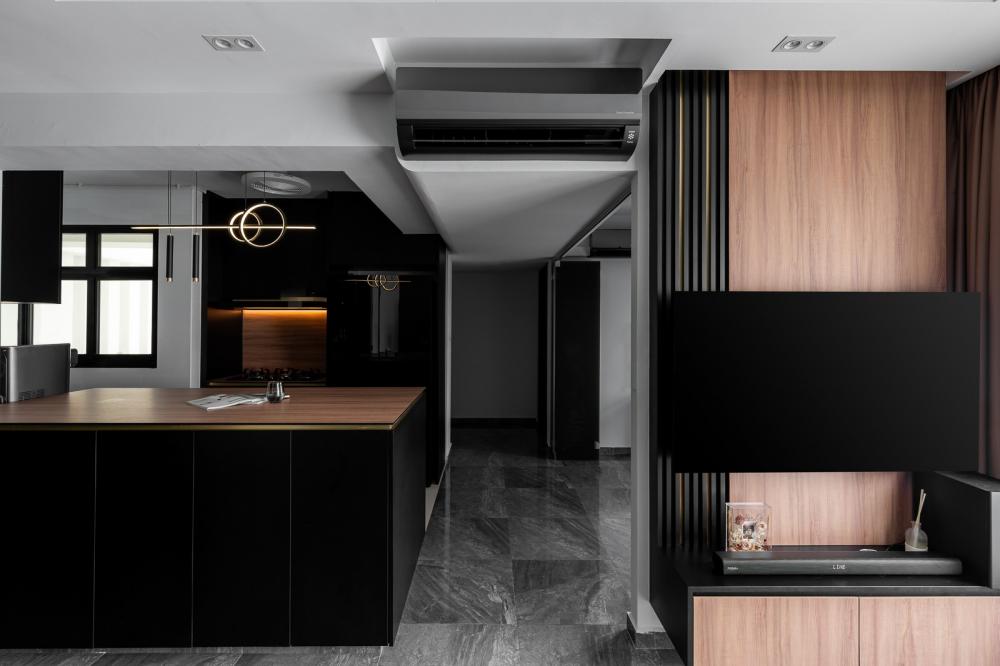
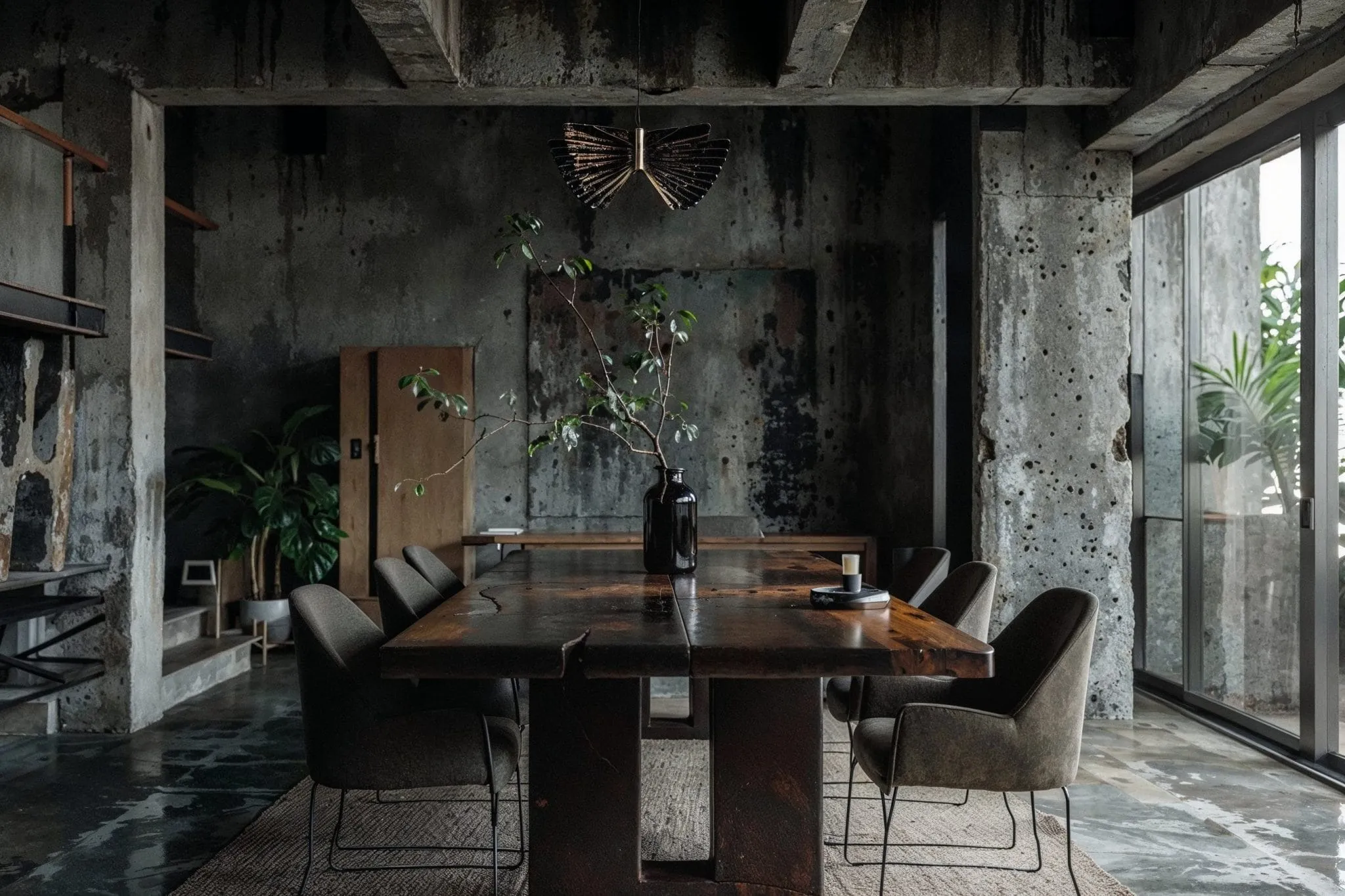
Form follows function in Brutalist design. Every beam, partition, or built-in has a clear purpose—and often, that purpose is made visible. Instead of hiding structural elements behind false walls or unnecessary panelling, Brutalist interiors celebrate them.
Source: decorilla.com
For example, a monolithic kitchen island isn’t just a cooking surface; instead, it can be a sculptural centerpiece. Built-in storage may look like part of the wall but serves multiple functions, blending structure with utility.
#3: Minimalism with Meaning
While minimalist in appearance, Brutalism is not about austerity—it’s about purposeful restraint. Every design element is considered: no fluff, no filler, just the essentials expressed beautifully. This philosophy works especially well in Singapore homes, where space is limited and functionality matters.
Here are some examples: Rather than crowding a small living room with decorative objects, a Brutalist approach might use…
- A single, low-profile concrete bench that doubles as a seat and display
- Wall-mounted lighting instead of bulky lamps
- Hidden storage integrated into flat wall planes
Brutalism vs Industrial Style: What’s the Difference?
Though they’re often mentioned in the same breath, Brutalism and Industrial style come from different design roots—and understanding the distinction helps you choose the right aesthetic for your home.
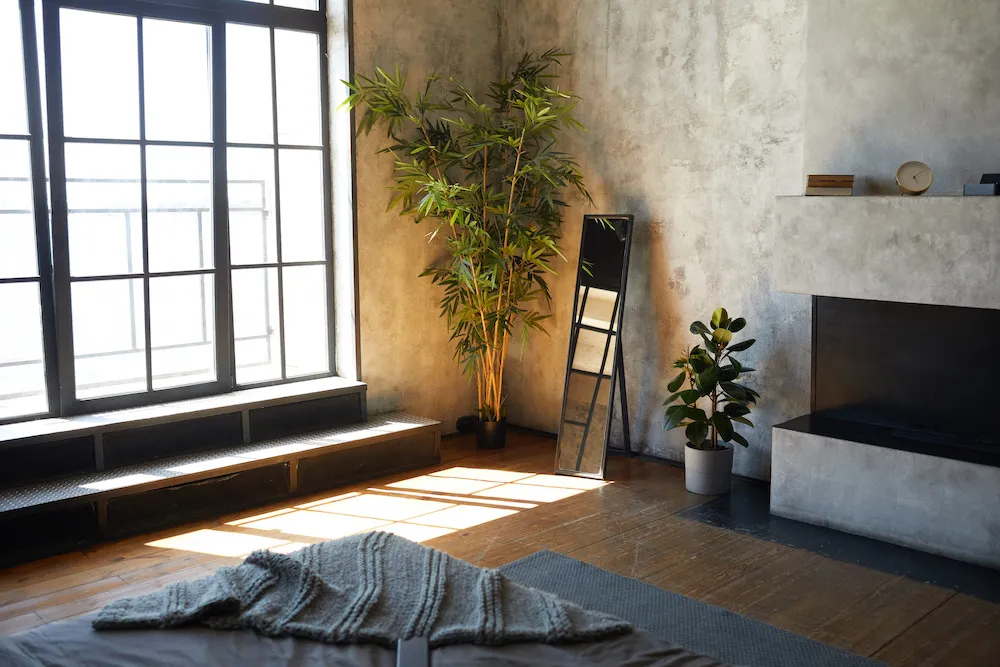
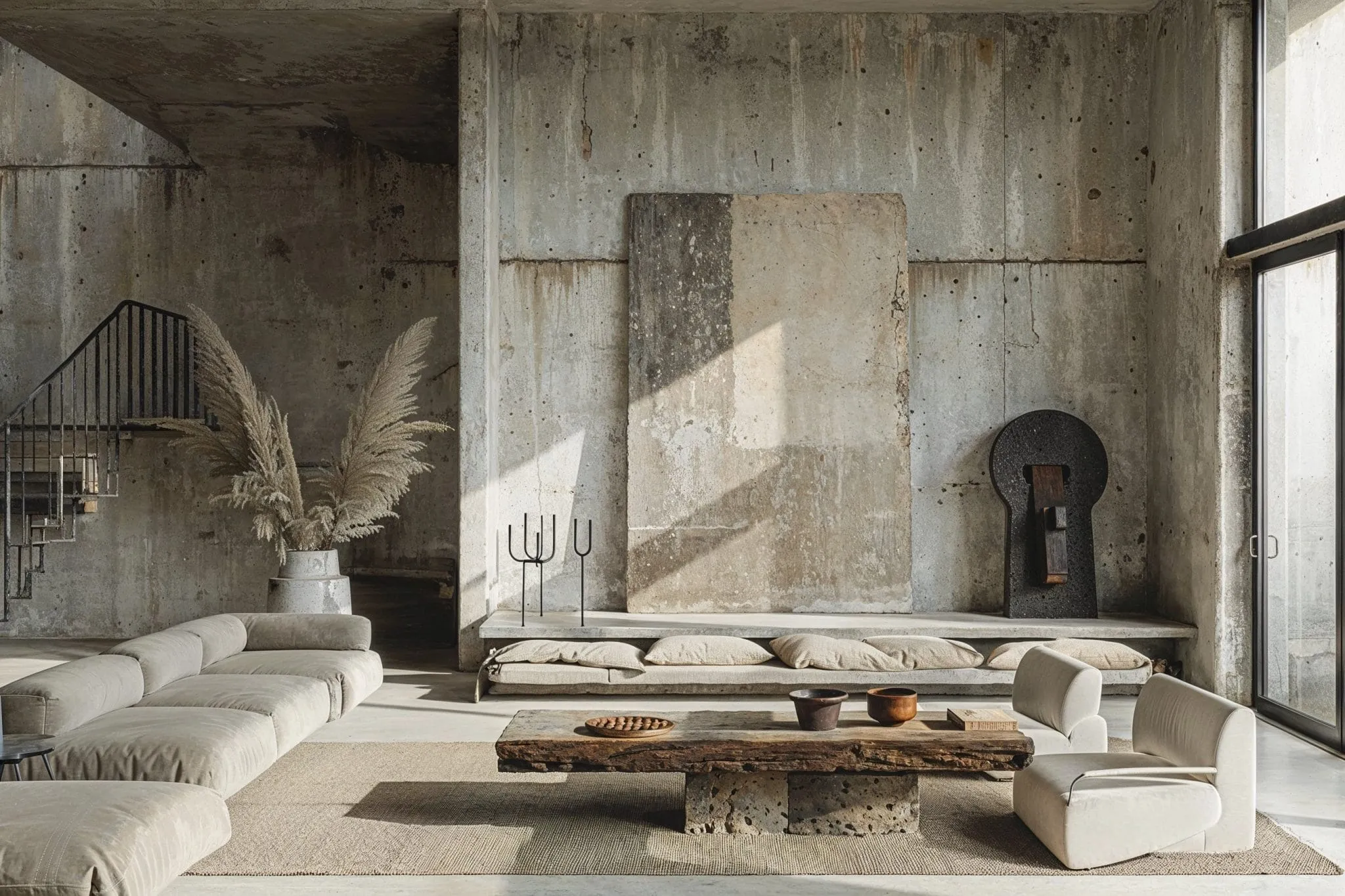
Brutalist design is clean and sculptural. It favours materials like exposed concrete, smooth cement screed, steel, stone, and raw timber. The look is monolithic and solid, with a minimalism that evokes a sense of permanence and quiet strength.
Source: decorilla.com
The colour palette leans neutral and cool—think charcoal, ash, off-white, and taupe. Furniture tends to be blocky, low-profile, and often custom-built or modular. The overall mood is calm, grounded, and almost museum-like in its restraint.
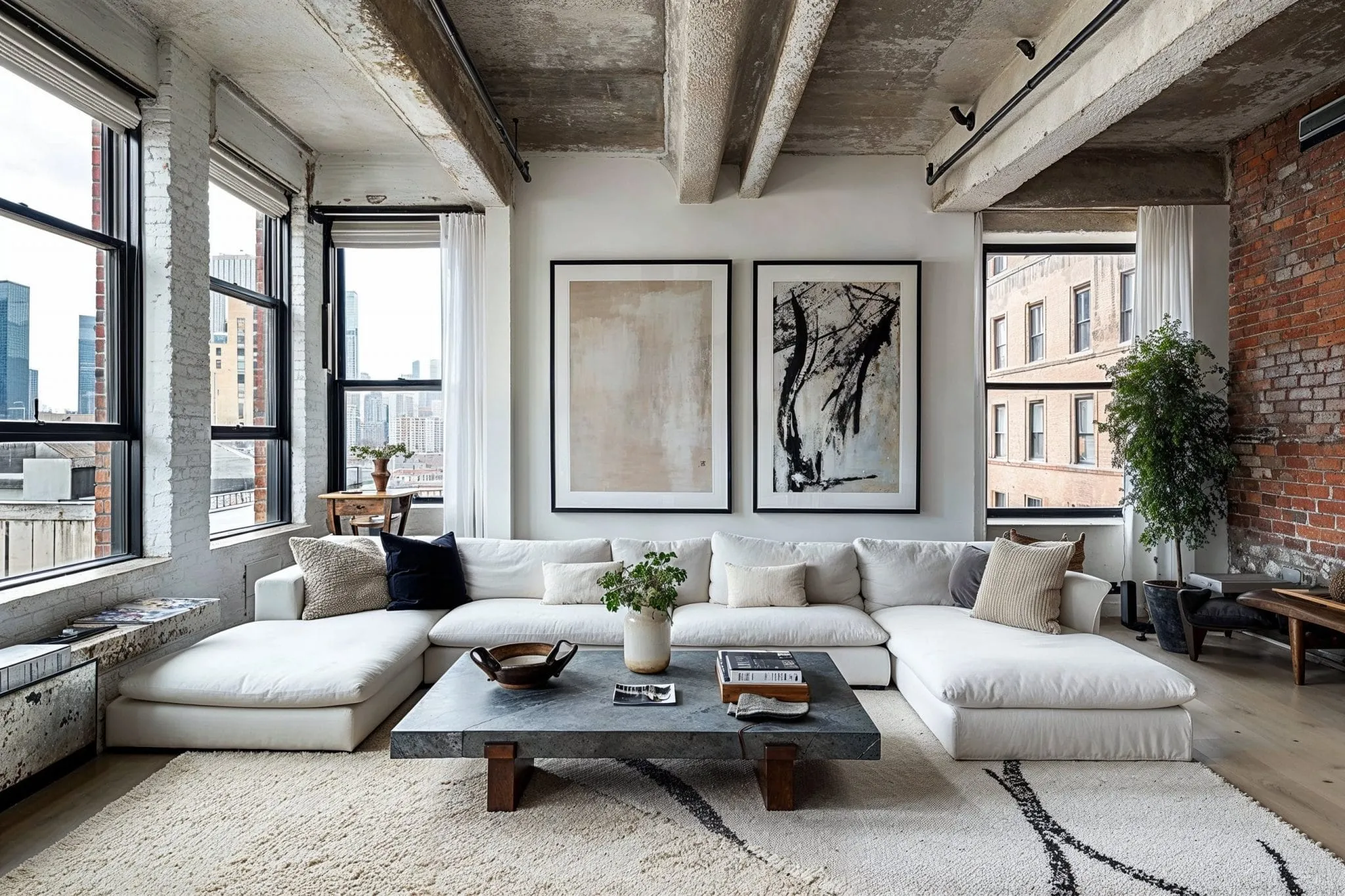
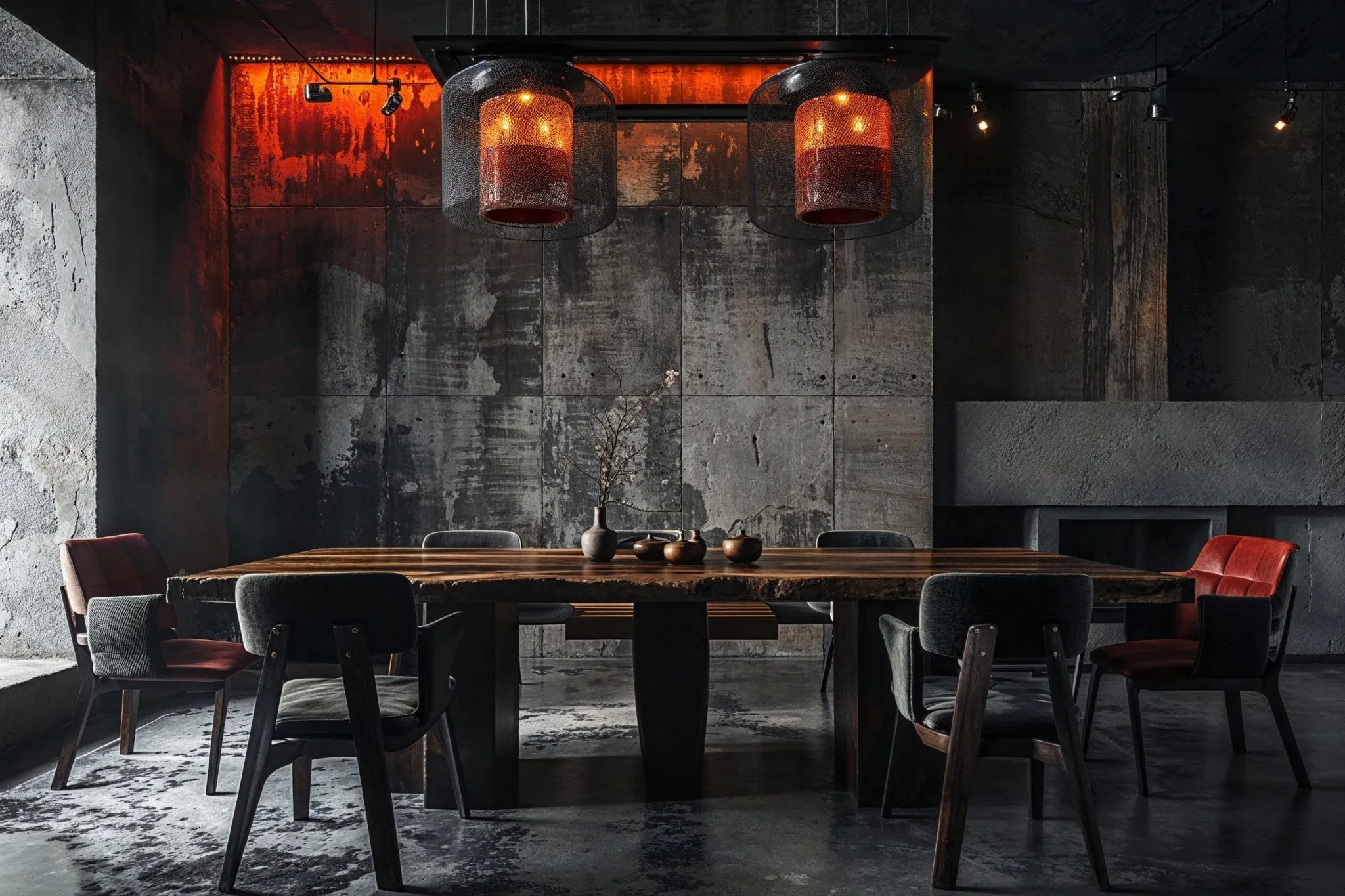
Industrial design, on the other hand, is raw and eclectic. It often incorporates exposed brick, reclaimed wood, copper accents, iron piping, and distressed finishes. The overall feel is grittier and more repurposed, evoking the aesthetic of old factories and urban lofts.
Its colour palette is warmer—rust tones, deep browns, matte blacks, and weathered metal finishes. Industrial-style furniture often includes vintage finds, open shelving, and visible hardware, giving spaces a more lived-in, tactile quality. The mood is edgy and creative, with a nostalgic nod to the handmade and the mechanical.
How to Translate Brutalism into a Singapore Home
Bringing Brutalism into a Singapore home requires both an understanding of the style’s principles and a bit of creativity.
If you’ve bought a resale unit, you might be in luck. Older flats come with finishes—false ceilings, vinyl flooring, or tiled walls—that can be stripped away to reveal the raw surfaces underneath. Think concrete structural walls, original cement screed floors, or exposed beams.
With the right treatment, these hidden elements can become features. Instead of covering them up, a Brutalist approach highlights their raw beauty. A light skim coat over the walls, a clear sealant on bare cement, or matte finishes on metalwork can go a long way in achieving that grounded, minimal look.
For new BTO flats, the challenge is different. These homes are handed over with smooth plastered walls, clean flooring, and no visible structural elements: essentially a blank slate. You’ll have to create the Brutalist feel from scratch.
That can mean applying a concrete-look microcement to your floors or walls, using cement screed-effect laminates for built-ins, or incorporating architectural lighting and solid, blocky furniture to suggest weight and presence. Consider using a muted, monochrome palette—shades of grey, taupe, or dusty white—and balance textures to keep the space feeling serene rather than sterile.
Regardless of whether you’re working with a resale or a BTO, the key is intentional simplicity. Remember, Brutalism isn’t about making your home look unfinished. Instead, it’s about expressing structure, material, and form with honesty and clarity.
Furniture and Fixtures that Complement Brutalism
Furnishing a Brutalist-inspired home is about embracing simplicity with intention. Look for pieces that feel sculptural and grounded, and items that could just as easily be in a gallery as they are in your living room.
Furniture should have a low profile and solid presence. Think slab-like coffee tables, oversized modular sofas in neutral tones, and concrete stools that double as side tables. These pieces shouldn’t shout for attention, but their forms should feel deliberate and quietly confident.
Source: decorilla.com
Built-in furniture works particularly well in Brutalist interiors. A cement-look TV console or full-height shelving unit crafted from wood laminate with a concrete finish can reinforce the sense of permanence and cohesion.
In bathrooms or kitchens, floating vanities with seamless surfaces help maintain that clean, weighty aesthetic. Rather than crowding the room with separate furniture, built-ins support the monolithic feel that Brutalism is known for.
Lighting is another powerful tool. Rather than decorative chandeliers or vintage-inspired sconces, opt for functional forms that border on architectural. Recessed lighting creates a soft wash of light without drawing attention to itself, while sculptural pendant lamps in raw materials—like metal or stone—add drama without fuss. You might also consider linear track lights or exposed bulbs housed in clean, minimal fittings for a more utilitarian edge.
When it comes to fixtures, less is more. Choose finishes like matte black or brushed metal for taps, handles, and hardware. Built-in appliances help maintain clean lines in the kitchen and keep the visual clutter to a minimum.
A useful tip for Singapore homes: work with a contractor or carpenter who understands minimalist carpentry and is open to customisation. The “integrated monolith” look—where shelving, storage, and surfaces blend seamlessly into the walls—often relies on well-executed built-ins that aren’t just functional, but sculptural in their own right. It’s worth investing in custom carpentry to get the precise proportions and textures that define a true Brutalist interior.
Colour and Texture Palette
A Brutalist interior is typically built on a foundation of neutrals, but that doesn’t mean it has to feel cold or lifeless. The key is to layer tones thoughtfully and introduce warmth through texture rather than colour.
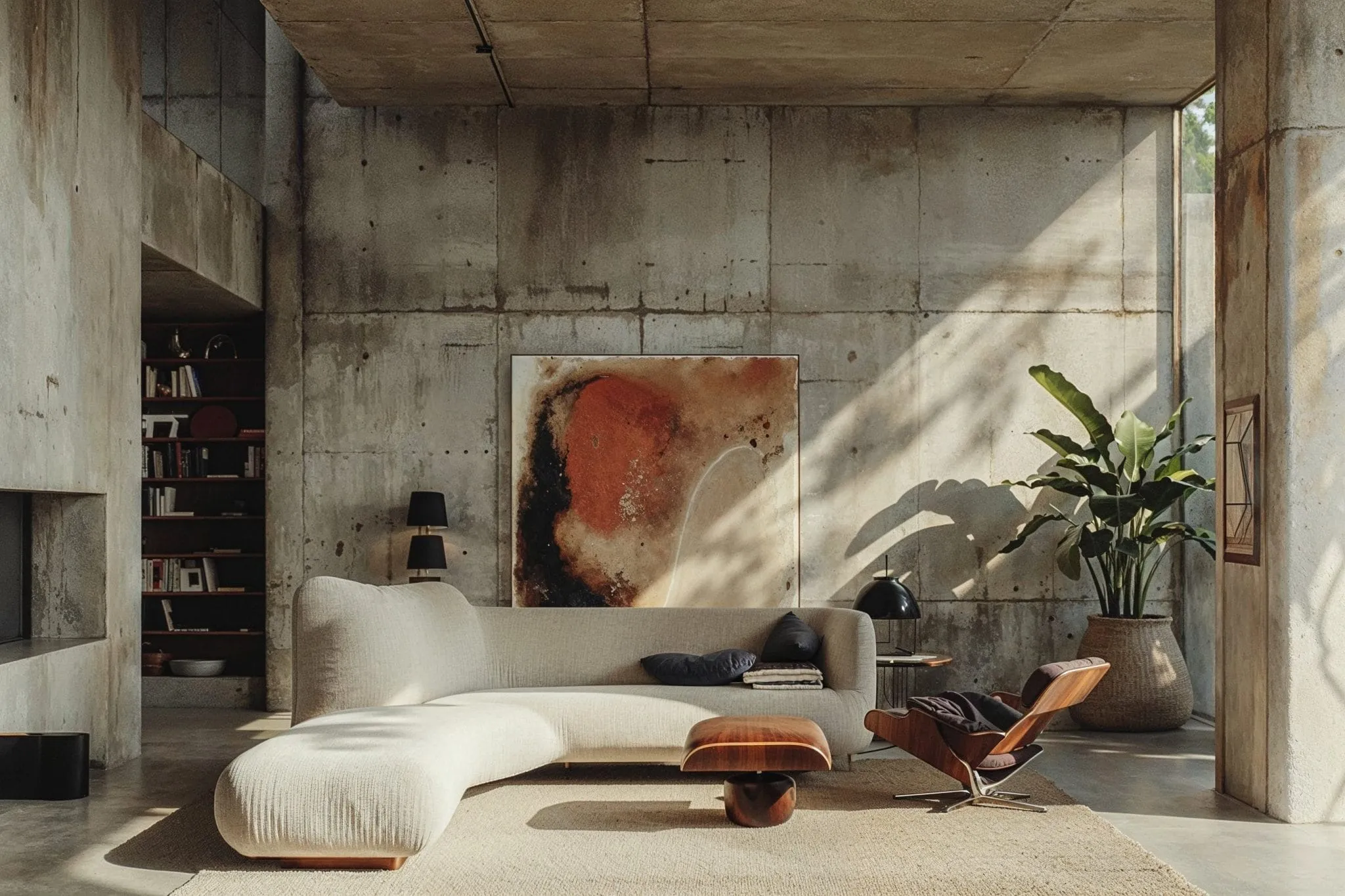
Start with a base of concrete grey, ash, or soft off-white. These cooler neutrals create a calm, grounded atmosphere and allow the structure of the space—walls, built-ins, and furniture—to take centre stage.
Source: thefurniture.com.sg
To add depth, use accent tones like deep taupe, matte black, or sand beige. These shades work well for framing elements like window trims, doorways, or built-in carpentry, subtly enhancing the spatial composition without overwhelming it.
Texture plays a major role in making a Brutalist space feel liveable. Raw concrete walls or cement screed floors offer an honest, tactile base, but they can be softened with layers of material like woven rugs, unfinished wood surfaces, or soft linen upholstery. Leather also works well here, especially in matte or lightly distressed finishes, which add a quiet richness without breaking the minimalist mood.
In compact Singapore homes, the challenge is often balancing Brutalism’s visual weight with the need for comfort. Instead of adding colour, which can feel jarring against the pared-back aesthetic, turn to texture to create warmth. Linen curtains, upholstery, or handcrafted ceramics can introduce an inviting, lived-in quality while keeping the palette cohesive.
Common Mistakes to Avoid
Brutalist interiors may look effortless, but executing the style well takes thoughtful planning. In Singapore’s compact flats, the margin for error is small, and missteps can make your home feel cold, echoey, or difficult to maintain. Whether you’re renovating a resale flat or designing a new BTO unit, here are a few common pitfalls to watch out for, and how to avoid them.
#1: Too much concrete
One of the biggest mistakes is overdoing the concrete. It’s easy to get carried away with this signature Brutalist material, but covering every wall and surface in grey can leave your home feeling more like a car park than a calm retreat.
The key is balance: pair concrete finishes with textured materials like raw timber, brushed metal, or fabric. Brutalism isn’t about monotony; it’s about restraint and harmony.
#2: Poor acoustics
Poor acoustics are another issue, especially in open-plan spaces. Hard surfaces like cement screed and glass reflect sound, which can create an uncomfortable echo. To soften the space, strategically introduce textiles, including thick rugs, linen curtains, or upholstered furniture. These elements absorb sound and make the home feel more livable without clashing with the Brutalist aesthetic.
#3: Forgetting about maintenance
Don’t overlook material maintenance, either. Concrete and cement screed need to be properly sealed to resist stains and moisture. This is especially important in kitchens and bathrooms, where water exposure is high. If not sealed well, these materials can crack, discolour, or attract grime over time, leading to costly repairs down the road.
#4: Ignoring lighting
Finally, underestimating lighting can rob your space of its potential. Brutalist interiors rely heavily on shadow, contrast, and texture, which means the wrong lighting can make everything look flat or overly severe. A layered lighting plan, with a mix of recessed ceiling lights, sculptural pendants, and warm accent lighting, can soften hard edges and highlight architectural details, bringing depth and warmth to the space.
Brutalism in a Family Home: Can It Be Done?
While Brutalism is often associated with high-concept design or bachelor pads, it can work beautifully in a family setting—with the right adjustments. In fact, the style’s durability, simplicity, and calm aesthetic can bring a sense of order to even the busiest households. But how you apply it should depend on who’s living in the space.
If you have young children, safety and softness should guide your Brutalist-inspired choices. Exposed concrete can still be part of the picture, but avoid sharp edges, overly hard surfaces, or materials that get slippery when wet.
Source: decorilla.com
Opt for rounded concrete furniture, soft rugs for play areas, and add warmth with upholstered pieces in neutral tones. Built-in storage is your best friend here—clutter undermines the serene, sculptural effect of Brutalism, and having everything tucked away helps preserve the clean look.
If you live with elderly parents, comfort and accessibility become the top priorities. Brutalism can be adapted by softening the visual weight of the space. Instead of polished concrete flooring, consider textured vinyl or matte tiles in similar shades for better grip and ease of movement.
Floating shelves or low built-ins can reduce bending or reaching, while warm lighting and soft furnishings can make the space feel inviting rather than austere. Avoid materials that feel too cold or hard underfoot, and integrate seating that is easy to get in and out of.
You can also consider mixing and matching styles across the home—leaning more heavily into Brutalist design in shared spaces like the living room or kitchen, while softening the aesthetic in your elderly parents’ bedroom with more modern or minimalist touches.
For example, their room could feature lighter wood tones, warmer lighting, and simpler lines, creating a calm, user-friendly environment without feeling stark. The key to making this blend feel cohesive is consistency in palette and materials.
Stick to the same base tones, such as greys, taupes, or off-whites, and repeat textures (like concrete-look laminates, brushed metal, or matte finishes) in different ways throughout the home. This allows each space to have its own character while still feeling like part of a unified whole.
What Other Design Styles Can Complement Brutalism?
While Brutalism has a strong, sculptural identity, it doesn’t have to stand alone. As we’ve just discussed, pairing it with the right complementary styles can soften the overall look, introduce visual variety, and make the space more livable—especially in a Singapore home where functionality and comfort matter. Here are a few ideas:
#1: Minimalism + Brutalism
Minimalism and Brutalism share a love for restraint, clean lines, and intentional design. Layering the two creates a cohesive aesthetic that feels calm and uncluttered. Opt for minimal furnishings in neutral tones and allow negative space to speak. This pairing is ideal for small spaces like BTO flats, where every item must earn its place.
#2: Japandi + Brutalism
Japandi (a blend of Japanese and Scandinavian design) introduces warmth and softness through natural wood, soft textiles, and simple craftsmanship. Used sparingly, these elements can offset Brutalism’s coolness without diluting its structure. Think: a linen-covered bench beside a concrete wall, or wooden slats that break up a monolithic façade.
#3: Modern Contemporary + Brutalism
A modern contemporary style adds a touch of polish—think sleek lighting, refined finishes, and a bit more comfort underfoot. If you’re designing for a family or multigenerational household, this pairing allows you to keep the architectural weight of Brutalism while weaving in plush seating, ergonomic layouts, and a slightly more inviting atmosphere.
#4: Wabi-Sabi + Brutalism
Wabi-sabi celebrates imperfection, patina, and the beauty of age. It’s an interesting counterbalance to Brutalism’s heavy permanence. Use tactile elements—like handmade ceramics, uneven plaster, or worn wood—to bring a sense of humanity and softness into an otherwise austere space.
Brutalism, Reimagined for the Singapore Home
Brutalism may have its roots in mid-century architecture, but its core values—honesty, function, and simplicity—remain strikingly relevant today. In a dense urban setting like Singapore, its calm geometry and enduring materials offer a refreshing alternative to overly familiar styles like Scandinavian or Japandi.
Whether you’re stripping back a resale flat to reveal its raw bones or designing a new BTO with sculptural restraint, Brutalism is more versatile than it first appears. It can be softened for family life, paired with warmer styles, or zoned to suit different household needs—all while staying true to its minimalist DNA.
Want to check out home renovation projects for more inspiration? Browse interior design ideas on Hometrust, or click the button below to get connected with expert designers!
Renovating soon? Let Hometrust recommend the best interior designers.
If you are reading this, you are probably wondering how you can create your dream home.
Here’s the thing, everyone’s needs and requirements for their home renovation is different. A designer that may work for someone else, may not quite work for you.
At Hometrust, we’re here to help match top rated designers, recommended by past homeowners to you through our data-driven and matching algorithm.
Whether you are looking for partial renovation or a full fledge overhaul, we’ll be able to recommend you top designers to match your renovation requirements and lifestyle.
Recommendations and free and you can simply start by helping us understand your needs below!
Get RecommendationsRenovate safe!
The Hometrust Team