The Ultimate Guide To Carving Out More Storage Space At Home
Living in Singapore means working with compact spaces, whether you stay in a BTO flat, a resale unit, or a condo. But you don’t need a larger home to enjoy a clutter-free, functional space. The key lies in using every inch of your home strategically.
This guide walks you through a simple but effective approach to storage—starting with clearing out what you no longer need, then showing you how to maximise space in every room.
Start with a Storage Audit
Before you install new shelves or order more storage boxes, take stock of what you already own. Walk through your home—kitchen, bedroom, bathroom, living room—and open every drawer, cupboard, and storage bin. You might be surprised by what you find. That appliance you forgot about, skincare that expired two years ago, or stacks of reusable bags tucked away in every corner.
Be honest with yourself. Are you holding onto things out of guilt or habit? Kitchen tools you used once and never again? Clothes that no longer fit or suit your style? Old chargers for devices you no longer own?
Decluttering is the first and most powerful step to reclaiming space. Once you’ve sorted what to keep, donate usable items to organisations like The Salvation Army. For bigger pieces like old chairs or shelves, contact your Town Council for their free bulky item removal service.
#1: Your Kitchen
The kitchen often feels like one of the most cramped areas at home, especially in Singapore flats where countertop and cabinet space is limited. But with the right approach, you can dramatically increase your storage capacity without needing to tear down walls.
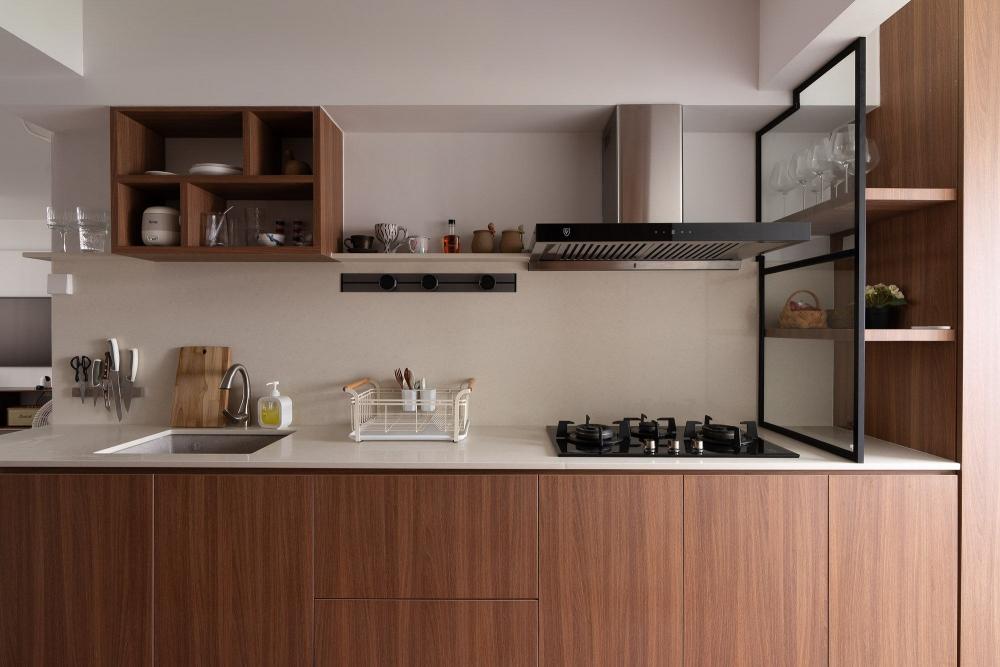
Blk 787D Woodlands Crescent ($70,000) by Goodman Interior
Start by working vertically. Inside your cabinets, add shelf risers to double the usable space. These let you stack plates, bowls, or dry goods more efficiently, so you don’t waste height.
Install pull-out baskets or sliding trays in deep lower cabinets. These help you reach items at the back without having to unpack everything in front. If your cabinets have fixed shelves, consider retrofitting them with adjustable inserts to create more flexibility.
Use the backs of cabinet doors to hang small racks or hooks. Store cutting boards, pot lids, or spice jars there to keep them off your counters. Magnetic strips can hold knives or spice tins, freeing up valuable drawer space.
Declutter your countertop as much as possible. Keep only the essentials within reach—maybe a rice cooker, kettle, or toaster. Move the rest into cabinets or storage carts. A slim rolling trolley can fit beside the fridge or between appliances and gives you a spot for condiments, oils, or snacks.
Don’t forget the under-sink area. This space often turns into a jumbled mess. Install stackable drawers or tension rods to hang spray bottles. Use waterproof bins to group similar items together and keep leaks or spills under control.
If your kitchen feels too open with floating shelves, swap them out or pair them with closed cabinets. Open shelving looks great in show flats, but may not work if you cook frequently and are in need of space. These shelves attract grease and dust, and it doesn’t give you the enclosed storage you need to hide clutter.
#2: Living Room
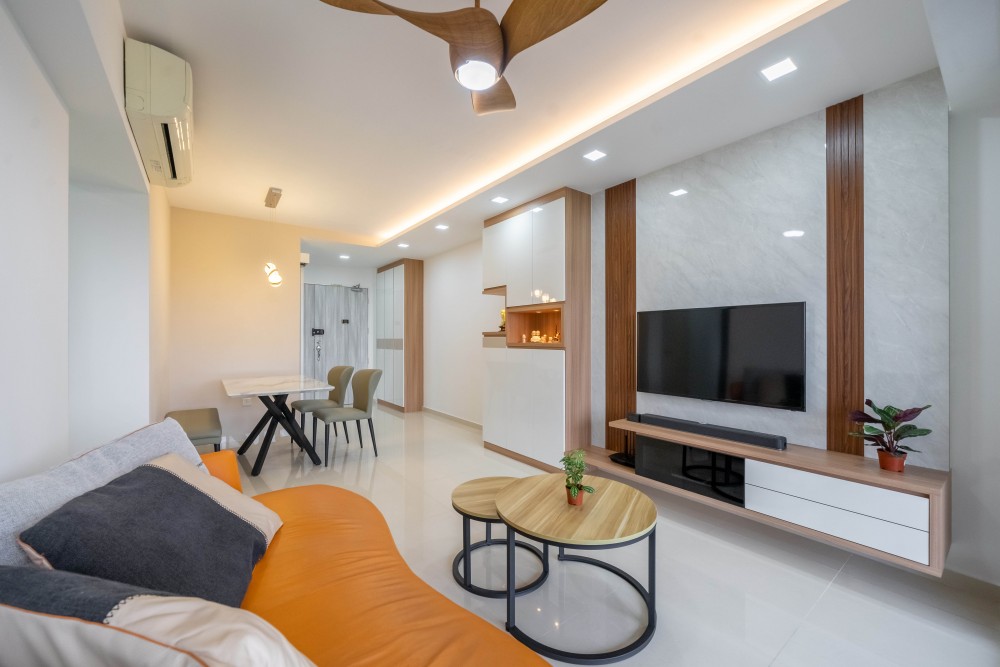
The living room often becomes a dumping ground for random items—remote controls, mail, chargers, magazines, toys. But it also offers many opportunities to sneak in extra storage without making the space feel cluttered.
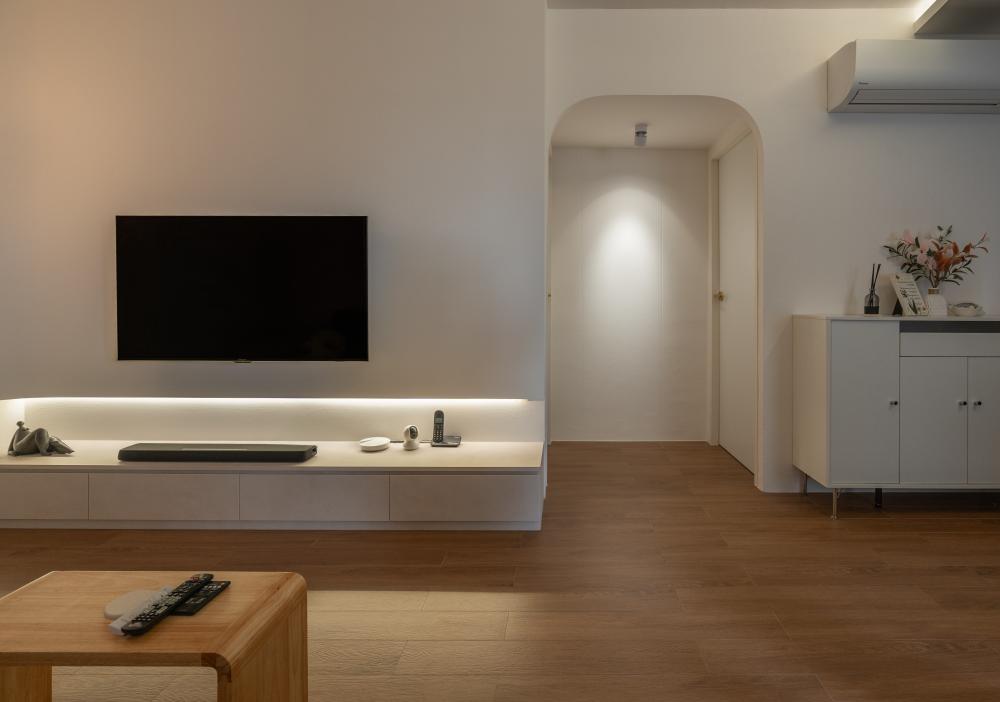
Blk 155 Lorong 1 Toa Payoh ($80,000) by Goodman Interior
Start with your sofa. Choose one with built-in storage under the seats. These compartments give you a convenient spot for blankets, books, or even extra cushions. You can also use storage ottomans or footstools that double as seating. These are ideal for storing less-used items like board games or seasonal décor.
If you’re planning a renovation, consider building a custom TV feature wall with both open shelving and closed cabinetry. Closed cabinets help you hide wires, game consoles, and router equipment, while open shelves give you space to display plants or décor. Aim for a balanced mix of both to avoid visual overload.
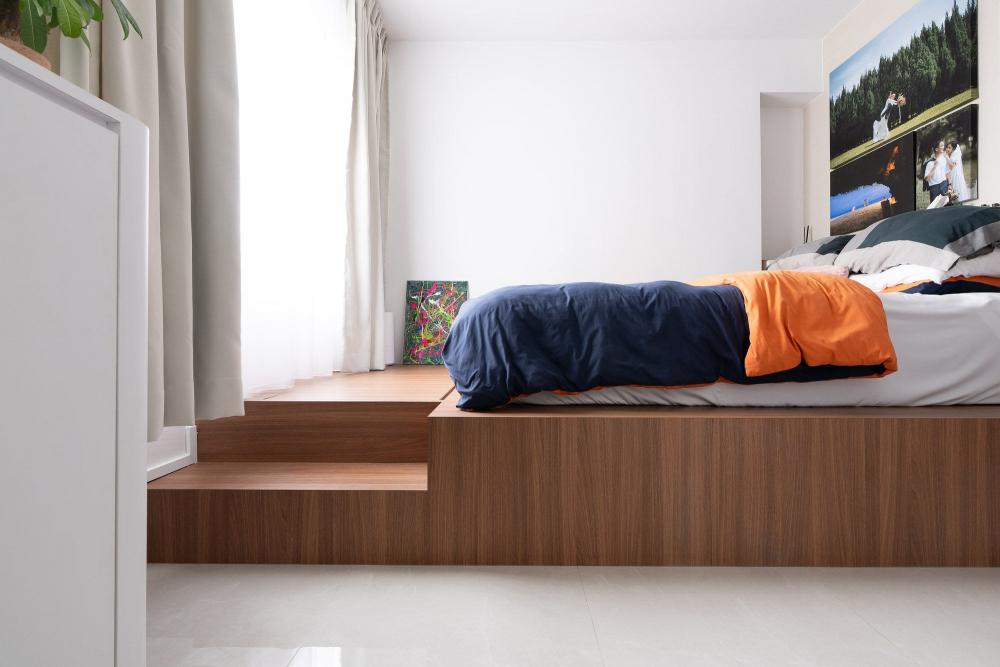
Blk 787D Woodlands Crescent ($70,000) by Goodman Interior
Some homeowners create raised platform flooring in their living room or bedroom, especially in open-plan layouts. This method turns your entire floor into storage space. Lift-up panels reveal deep compartments underneath where you can store bulky items like luggage, workout gear, or books. This solution works particularly well if you want a sleek, built-in look that doesn’t eat into your room’s footprint.
Use your walls to free up floor space. Mount floating shelves to hold décor, speakers, or books. Hang organisers behind doors to store remote controls, cables, or children’s toys. If you have young children, use low drawers or bins so they can help tidy up at the end of the day.
Consider a coffee table with drawers or a lift-up top that reveals hidden compartments. Some versions allow you to store items inside and also raise the tabletop to serve as a makeshift desk—ideal for small homes where space needs to multitask.
Avoid using the living room as a storage overflow. Make intentional decisions about what you keep here. Use baskets or boxes to contain smaller items and label them clearly. Keeping things neat and out of sight helps the room feel more open and restful.
#3: Bedroom
The bedroom should feel like a calm retreat, not a cluttered storage zone. But in most flats, it often ends up as the overflow area for items that don’t fit elsewhere. The key is to make storage feel seamless. Your storage should be integrated into your furniture and layout without adding visual bulk.
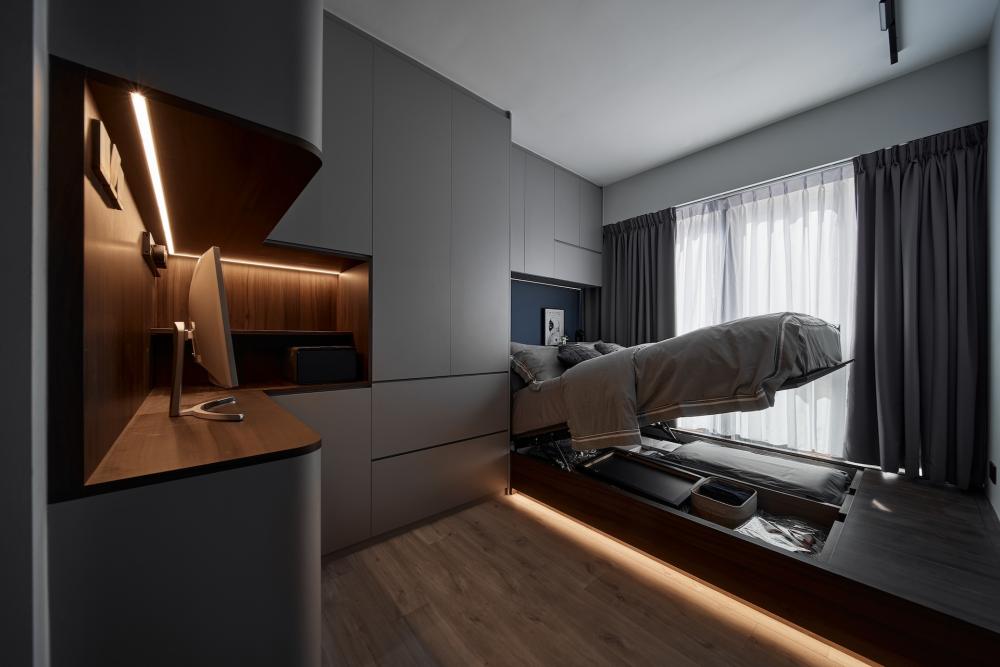
15 Mount Sophia ($54,000) by Ecasa Studio
Start with your bed. This is one of the largest pieces of furniture in the room, so make it work harder. Choose a frame with built-in drawers or a hydraulic lift-up base. These give you a generous amount of storage for travel bags, extra pillows, or spare bedding. If you already have a basic bed frame, consider sliding shallow bins underneath to store items you don’t reach for every day.
Take a closer look inside your wardrobe. Many built-in wardrobes have lots of hanging space but waste the vertical space beneath. Add hanging organisers or slim drawer units to maximise every shelf. Use storage boxes to group similar items together—think accessories, undergarments, or handbags—and label them so you can find what you need quickly.
Hang hooks or racks on the inside of wardrobe doors or behind bedroom doors. These provide extra space for scarves, belts, or bags without taking up any floor space. If your wardrobe doesn’t reach the ceiling, use the top as storage for items you rarely use. Place things in matching boxes to keep it tidy and uniform.
Avoid using your bedside table as a dumping ground. Choose one with drawers or compartments so you can store chargers, books, and other essentials neatly. Add drawer dividers to prevent the contents from turning into a jumble.
If you have a vanity or dressing table, use organisers with compartments for makeup, brushes, and skincare. This reduces clutter on the surface and helps you get ready faster.
In smaller bedrooms, wall-mounted shelves can help keep floors clear. You can use these to display a few favourite items or hold functional things like books and an alarm clock.
#4: Bathroom
Bathrooms in Singapore tend to be compact, especially in newer BTO flats or condos. But that doesn’t mean you have to settle for cluttered countertops or awkward storage.
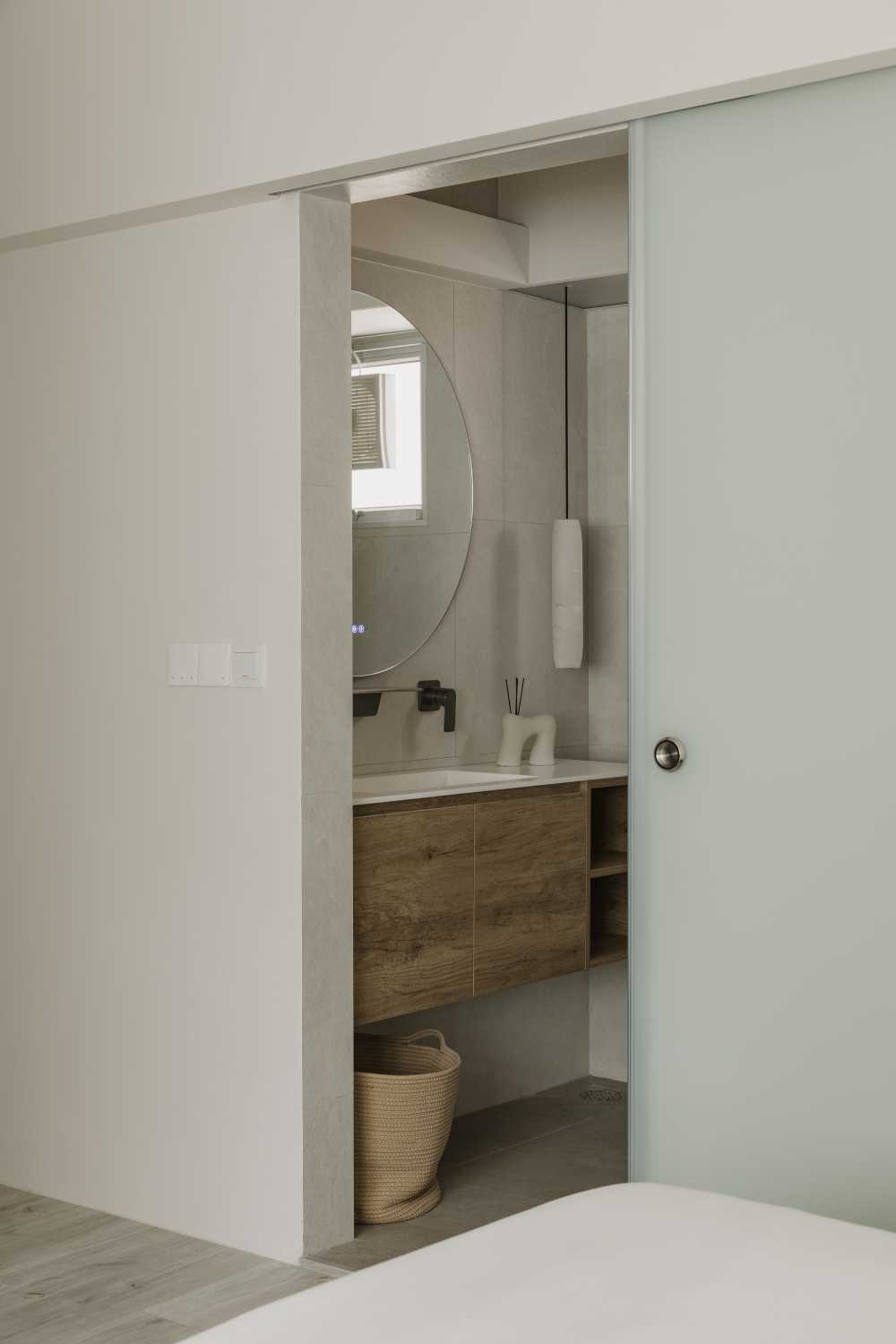
9 Joo Seng Road ($90,000) by The Interior Lab Pte Ltd
Look up and take advantage of vertical space. Install tall, slim cabinets or narrow shelving units to store everything from extra toilet rolls to skincare. If your bathroom has no built-in cabinets, use a combination of over-the-toilet shelves, wall-mounted caddies, and corner racks to create new storage spots.
The area under the sink often becomes wasted space. If your sink has no cabinet below, place stackable drawers or baskets underneath. Choose organisers that can handle moisture and make it easy to access your daily essentials. Tension rods can help hang spray bottles, and trays can group small items like cotton pads, razors, and backup toiletries.
Use adhesive hooks or over-the-door racks for towels, robes, and loofahs. These options don’t require drilling and work well in rental units. Magnetic or suction cup holders can also keep toothbrushes, razors, or soap dishes off the sink, freeing up more space.
If you’re planning a renovation, consider your sink setup carefully. While stone slab sinks are a popular trend, they often offer zero storage underneath and eat up precious space. A better choice would be a wall-mounted sink with drawers or a floating vanity that gives you both visual openness and practical storage.
Store backup items like toothpaste or toilet rolls in baskets or bins inside a cabinet, so you don’t clutter up visible surfaces. Clear containers help you keep track of what’s running low.
Add a small, narrow trolley if you have a bit of floor space near the door or between fixtures. These mobile units can hold towels, hair tools, and cleaning supplies while remaining easy to move when needed.
#5: Bomb Shelter
In most Singapore flats, the bomb shelter doubles as a storeroom. It’s often where homeowners stash everything from suitcases to cleaning supplies, sports gear, and random boxes. But with a bit of planning, you can turn this underused space into an organised, high-capacity storage area that works much harder for your household.
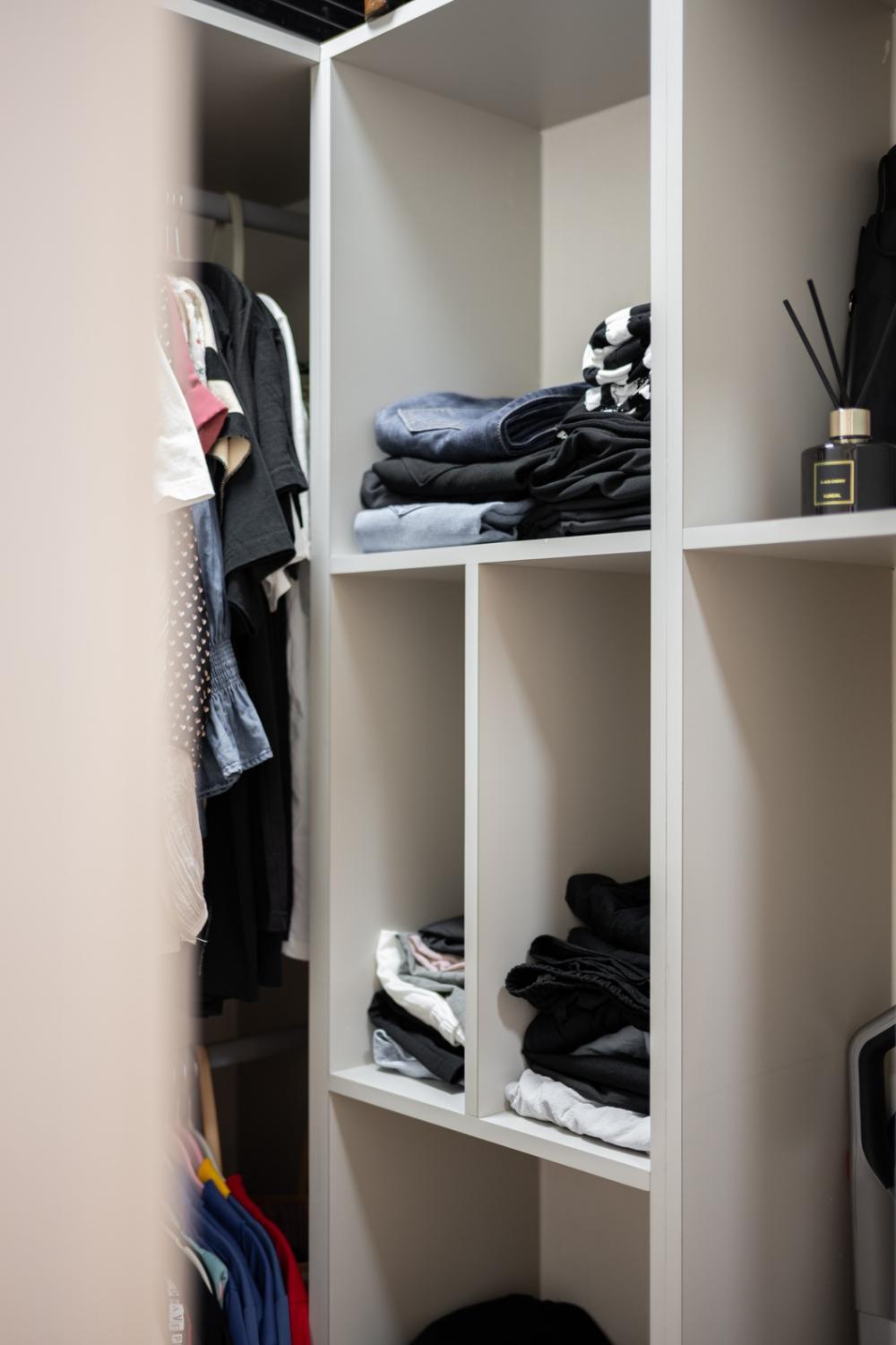
653C Punggol Drive ($20,000) by Livinci Interior Design
Start by installing strong, adjustable shelving units that make full use of the vertical space. Choose deep, sturdy racks that can support heavy items like bulk grocery stock, paint cans, or toolboxes. Arrange the shelves by category—cleaning supplies on one side, travel items on another—so you always know where to find things.
Use clear plastic boxes or matching storage bins with labels to keep items grouped and stackable. Avoid stuffing things into loose plastic bags or paper boxes, which make the space harder to navigate and tend to get messy over time.
Take advantage of the door and wall surfaces too. Install over-the-door organisers to store items like umbrellas, batteries, or lightbulbs. You can also mount wall hooks to hang items like shopping trolleys, reusable bags, or folded stools.
Keep heavier items lower down and lighter ones higher up so it’s safer and easier to access what you need. Use drawer-style bins or sliding boxes at the bottom for things you reach for regularly, so you don’t have to unpack the entire shelf each time.
Always remember that the bomb shelter still serves an emergency function, so keep the entrance clear and don’t modify the walls, flooring, or ventilation openings. Stick to removable, non-invasive storage options that let you maximise the space without compromising safety.
#6: Entryway
Your entryway is the first part of your home you and your guests see, and it often becomes a catch-all for shoes, bags, umbrellas, and mail. While it might feel like a tight space, especially in newer flats, you can still introduce smart, low-profile storage without cluttering the walkway.
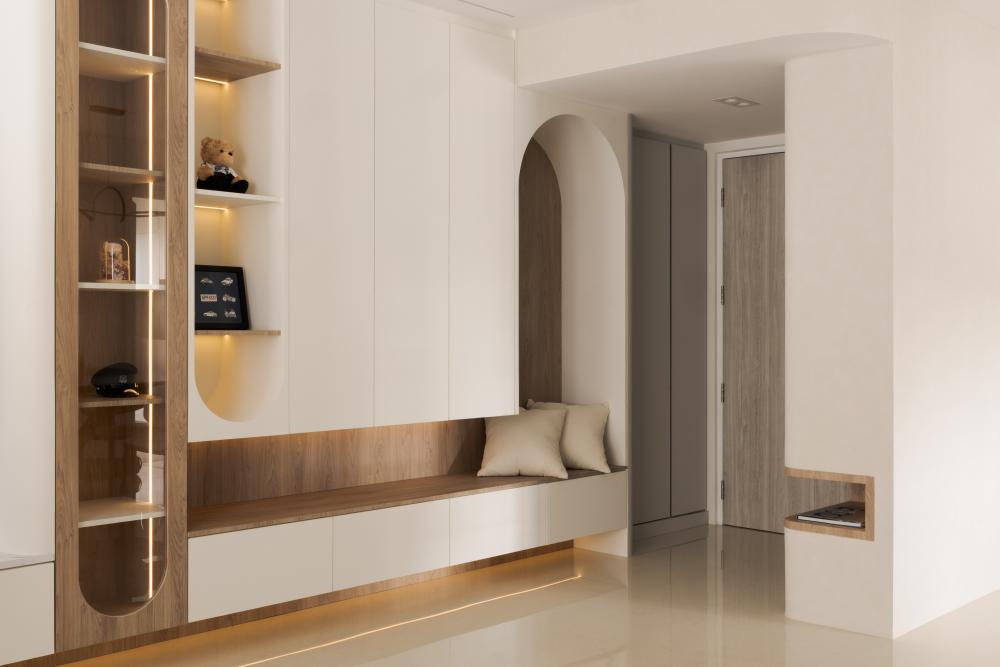
Blk 219A Tengah Garden Walk ($65,000) by Goodman Interior
Start with a slim shoe cabinet that fits neatly along the wall. Choose one with a closed design to keep the area looking clean and to reduce odours. Some shoe cabinets come with a bench built on top, giving you a place to sit while putting on shoes and a hidden compartment inside for storage.
Mount small wall shelves or a floating tray near the door to catch essentials like keys, coins, or access cards. This helps prevent last-minute scrambling when you’re heading out. Use hooks for hanging frequently used items like handbags, lanyards, or foldable umbrellas.
Install a vertical rack or umbrella stand in the corner to keep wet umbrellas from creating puddles on your floor. If your home has a longer hallway, consider placing narrow shelving units or recessed cabinets to store cleaning tools, linens, or everyday items you want to keep out of the main living space.
Use mirrors with concealed storage to combine function with style. A full-length mirror that opens to reveal shelves or compartments can store smaller accessories or even grooming items if placed near the bedroom.
If you have children, assign them a designated shelf or hook for their school bags and shoes. This helps keep things off the floor and teaches them to tidy up as they enter and exit the home.
#7: Balcony
Not every flat in Singapore comes with a balcony, but if you do have one, you can turn it into a surprisingly useful storage zone. With the right setup, it becomes more than just a space for drying clothes or growing plants.
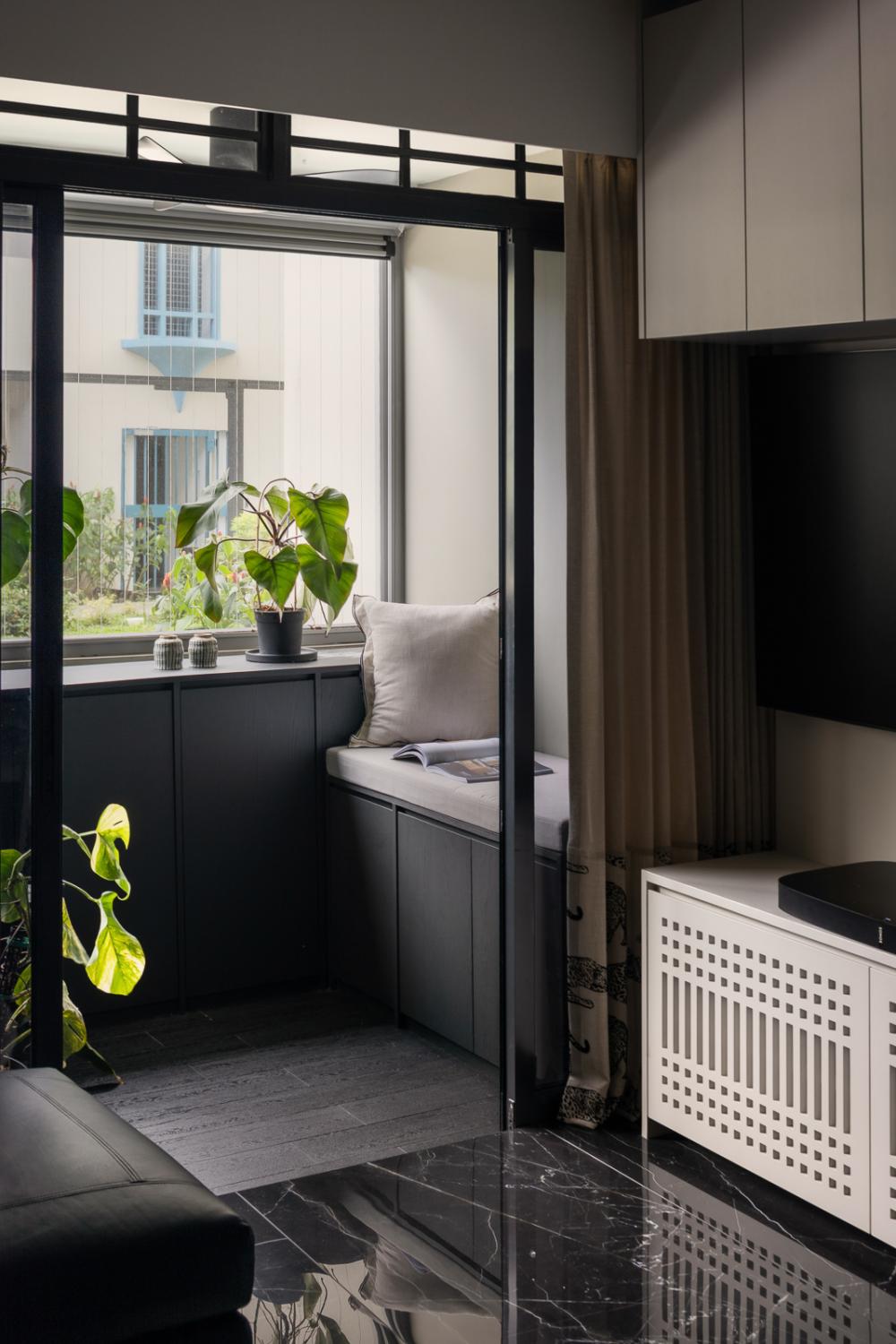
Avenue South Residence III ($205,000) by The Interior Lab Pte Ltd
Start by choosing outdoor furniture specifically designed for weather exposure. Instead of just looking at materials like treated wood or powder-coated metal, check if the product is actually categorised as outdoor-use. These pieces tend to hold up much better against Singapore’s humidity, rain, and heat. Look for storage benches, side tables with hidden compartments, or tall cabinets designed for balconies or patios.
Use vertical space to your advantage. Install wall-mounted shelves or narrow standing racks to hold both decorative plants and storage bins. You can group similar items together—gardening tools, cleaning supplies, or sports gear—and store them neatly in waterproof containers or baskets.
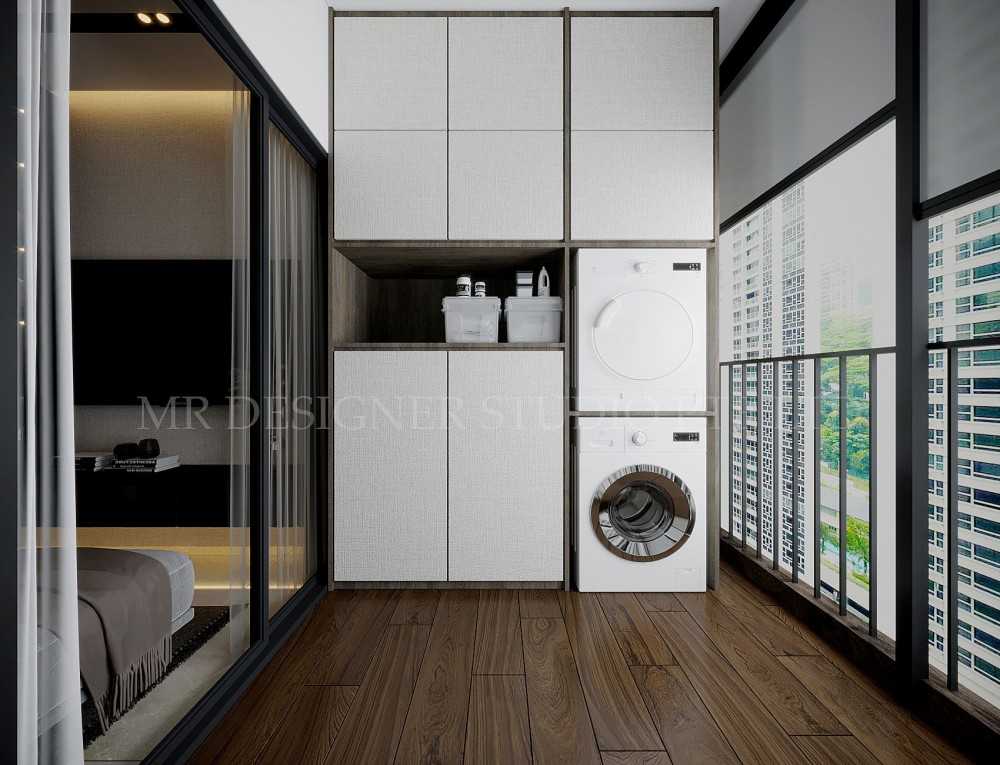
The Garden Residence ($40,000) by Mr Designer Studio
If you do laundry on your balcony, add a storage unit beside your washing machine to hold detergent, pegs, and other accessories. Choose something compact but sturdy, ideally with ventilation slots to prevent moisture buildup.
A Final Word on Creating More Storage At Home
Creating more storage space doesn’t require a bigger home. You just need a fresh way of looking at the space you already have. Start by clearing out what you don’t use, then design each room with function in mind. Smart storage helps you live better—not just with more room, but with more peace of mind.
Want to check out home renovation projects for more inspiration? Browse interior design ideas on Hometrust, or click the button below to get connected with expert designers!
Renovating soon? Let Hometrust recommend the best interior designers.
If you are reading this, you are probably wondering how you can create your dream home.
Here’s the thing, everyone’s needs and requirements for their home renovation is different. A designer that may work for someone else, may not quite work for you.
At Hometrust, we’re here to help match top rated designers, recommended by past homeowners to you through our data-driven and matching algorithm.
Whether you are looking for partial renovation or a full fledge overhaul, we’ll be able to recommend you top designers to match your renovation requirements and lifestyle.
Recommendations and free and you can simply start by helping us understand your needs below!
Get RecommendationsRenovate safe!
The Hometrust Team